


Two cinema and television arts majors have earned multiple awards for their film, 鈥淭he Desert Gardener,鈥� which highlights a former science teacher鈥檚 mission to fight food insecurity through urban farming.

It鈥檚 hard to know where to start when summarizing the many accolades earned by 鈥淭he Desert Gardener,鈥� a short documentary produced by and . Even before its March premiere at the TCL Chinese Theatre in Hollywood as part of the Golden State Film Festival, the film was already gaining widespread recognition.
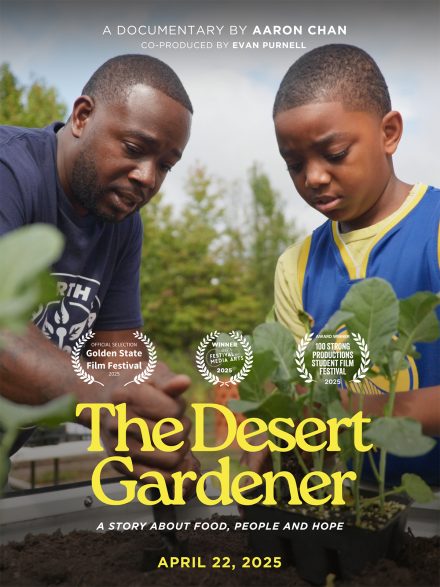
A portrait of James Gardner, a former Greensboro science teacher who left the classroom to combat food insecurity by growing and giving away fresh vegetables, 鈥淭he Desert Gardener鈥� has received praise both nationally and locally for its storytelling and production quality.
In February, the film earned an Award of Excellence in the 2025 BEA Festival of Media Arts, an international competition that recognizes top student work in digital media and broadcasting. In May, the documentary won Best in Festival honors at the inaugural 100 Strong Student Film Festival, which celebrates stories that spotlight local communities across North Carolina.
Most recently, the documentary won a college film contest sponsored by the Greensboro Alumnae Chapter of Delta Sigma Theta Sorority, Incorporated. The competition, which honors the African American impact in Guilford County, awarded Chan the $1,000 top prize and high praise from judges. One judge described the film as 鈥渆xceptional 鈥� one of the most professional student videos I鈥檝e seen.鈥� 鈥淭he Desert Gardener鈥� will now be distributed in Guilford County schools as part of future Black History Month programming.
The inspiration for the film came from a chance encounter. While volunteering for a class, Chan met Gardner and quickly recognized the power of his story.
鈥淲e started talking about his work in the community, and I realized that I could contribute by telling his story,鈥� the cinema and television arts major said. 鈥淎t the time, I felt like the work I was doing as a filmmaker wasn鈥檛 doing anything useful for the world, and as I sat there at the table listening to James explain how he quit his job as a teacher and became a farmer to combat food inequality, I knew I wanted to tell his story.鈥�
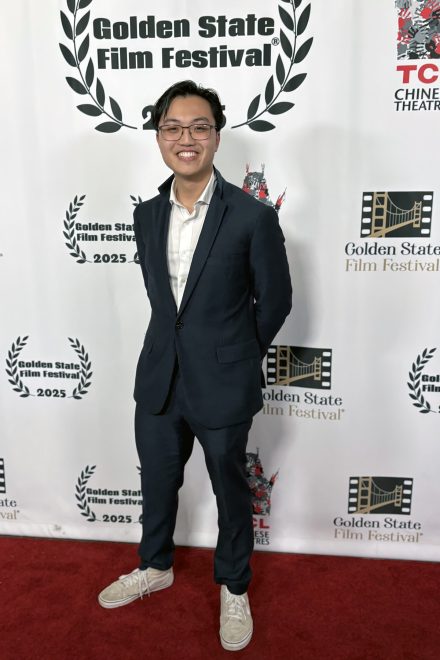
But the filmmaking process wasn鈥檛 easy. The project spanned more than 10 months, involving planning calls, three shoot days, and six months of editing. Chan said the project gained momentum during his Documentary Aesthetics course with Associate Professor Nicole Triche. With the support of class deadlines and feedback, he was able to shape the story into a meaningful final product.
Helping Chan bring Gardner鈥檚 story to life was Purnell, a fellow cinema and television arts major who served as the project鈥檚 co-producer. The pair collaborated closely, with Purnell supporting pre-production by studying similar documentaries and analyzing their structure. During filming, he contributed interview questions and captured b-roll.
Purnell said the story had personal relevance.
鈥淚 was drawn to the project because I was eager to get some experience outside of class and because the subject matter interested me,鈥� he said. 鈥淥utside of school I work as a gardener at 黑料不打烊 and have volunteered at farms previously.鈥�
Chan said the film鈥檚 reception has been deeply meaningful. 鈥淚鈥檓 grateful that the film seems to resonate with people, and that James’ story is getting out there,” the junior said. “As a first-time documentary filmmaker, it鈥檚 a big encouragement for me to keep going.鈥�