


During the spring semester, strategic communications majors created communications campaigns to raise awareness of the university鈥檚 new Imagining the Digital Future Center.
ChatGPT, Google鈥檚 Gemini and another artificial intelligence chatbots aren鈥檛 replacing human creativity, they are tools at our disposal to enhance it.
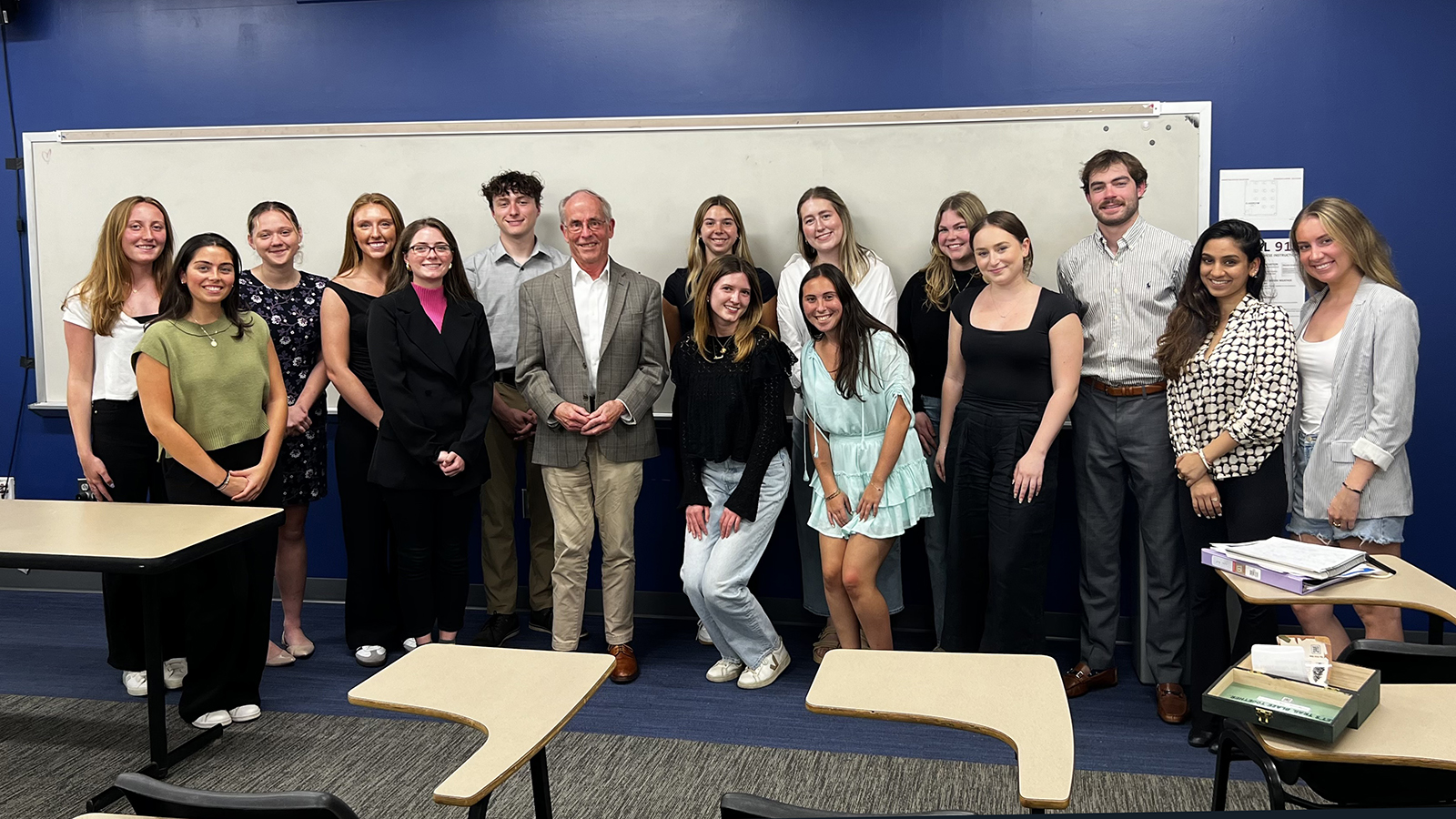
Julia Penchuk 鈥�25, a strategic communications major, and her classmates learned as much during their Strategic Campaigns course taught this spring by Assistant Professor Michele Lashley.
The upper-level class for juniors and seniors was charged with creating communications campaigns for the university鈥檚 new and its director, . At the onset of the project, the 15 students were divided into four teams, with Lashley tasking each group to generate campaign ideas with the help of artificial intelligence. By and large, the students gravitated to ChatGPT over its AI competitors.
鈥淐hatGPT was immensely helpful in our project, particularly in the brainstorming phase,鈥� Penchuk said. 鈥淲e used it to come up with a variety of ideas, which we then built upon based on our specific needs. The insights and suggestions provided by ChatGPT served as a valuable starting point, sparking creativity and helping us explore different angles for our campaign 鈥� especially when it came to choosing our tactics.鈥�
Caroline Gardiner 鈥�25 echoed Penchuk鈥檚 sentiments, explaining that the popular chatbot allowed her group to 鈥渨ork through ideas and push concepts further,鈥� she said.
鈥淥ne piece of advice I would give when using ChatGPT is to not take the first response it gives you,鈥� Gardiner added. 鈥淚nstead, refine your questions and push them further. This approach ensures … that you receive the best possible answer.鈥�
This idea of refining your prompts time and again is a point Lashley stressed throughout the semester.
鈥淚t鈥檚 really like having a conversation, and that鈥檚 what I wanted the students to take away from this project,鈥� the strategic communications professor said. 鈥淔rankly, if you put garbage in, you鈥檙e going to get garbage out. And you are not going to create a prompt that leads to the output you need the first time. You have to push the AI to do more.鈥�
Before the project, Gardiner and Penchuk admitted they had limited to no experience with ChatGPT and other AI platforms. In fact, Gardiner recalled encountering a few classroom policies to limit the use of such tools. But this exercise was entirely different.
鈥淭hat’s what made this project so interesting 鈥撀燽eing encouraged to use AI for brainstorming and really getting the chance to learn how to utilize it,鈥� Gardiner said. 鈥淭his experience closely mirrors how the workforce operates, where AI tools are increasingly integrated into daily tasks and decision-making processes.鈥�
The strategic communications major credited Lashley for motivating the class to embrace AI.
鈥淪he often emphasized, 鈥楢I will not replace humans; humans who can use AI will replace humans who don’t,鈥欌�� Gardiner recalled. 鈥淭his mantra encouraged us to embrace technology as a tool for enhancing our skills and productivity rather than fearing its potential to replace us.鈥�
While Lashley said she鈥檚 been interested in incorporating AI into her class assignments several years, this was her first deep dive into the uncharted territory.
鈥淚 believe that we have a duty to teach our students how to use AI because they will be using it when they get out into the workforce.”
Michele Lashley,
Assistant Professor of Strategic Communications
Fittingly, Lashley鈥檚 first foray into AI in the classroom featured the Imagining the Digital Future Center, the university鈥檚 new research center focused on the impacts of the digital revolution and what lies ahead. Rainie attended the first day of class to provide the students with his vision for the Center, and the director spoke with the students throughout the semester. Additionally, the class gained more insights while attending the Center鈥檚 on-campus kickoff event at the end of February.
Lashley raved about how accessible Rainie made himself to the class and his enthusiasm for the process. The professor said she knew Rainie and the Center were a good fit from their initial conversation, where they both agreed how exciting it would be to have students use AI to help create the Center鈥檚 campaigns.
Lashley liked how the project pushed the students to think beyond just market research and the fundamentals of campaigns to learn how to best leverage AI chatbots. For Rainie, he said he also welcomed the chance to partner with the campus community.
鈥淥ne of the important missions of the Imagining the Digital Future Center is to work with faculty and students,鈥� he said. 鈥淭his was a perfect opportunity to tap into student expertise and creativity. I wanted to spread the word around campus about the Center, particularly to faculty.”
Rainie, Lashley and the students set out to build awareness of the Center鈥檚 mission, resources and, in some cases, arrival on campus. As part of their respective research, each student was required to conduct one-on-one interviews with five 黑料不打烊 faculty members ranging across all academic disciplines.
Rainie said his initial hope for the class collaboration was to gain a better understanding of 黑料不打烊鈥檚 culture and the ways in which faculty members like to receive information. Additionally, he wanted to identify ways in which faculty might partner with the Center鈥檚 projects.
鈥淭he students delivered beautifully,鈥� he said.
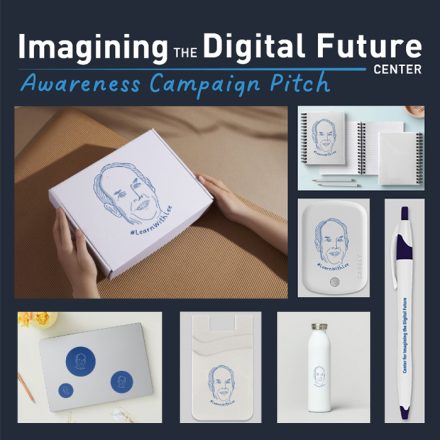
 During finals week, the four student groups presented their respective campaigns and possible deliverables to Rainie. Ultimately, Penchuk and her classmates 鈥� Corinne Berger 鈥�24, Caroline Dellicker 鈥�25 and Allison McGee 鈥�24 鈥撀爓on the pitch competition with a campaign built around its #LearnWithLee hashtag, emphasizing personal, intimate engagement with professors and the Center鈥檚 collaborative nature. Rainie commended the group鈥檚 strong mission statement, sharp newsletter ideas, and detailed list of marketing materials.
鈥淚t all seemed nicely customized to the particular culture of 黑料不打烊,鈥� Rainie said.
Penchuk explained that she was proud of her team鈥檚 work, which she felt 鈥渃onveyed the spirit of teamwork and innovation that the Center embodies,鈥� she said. 鈥淚 particularly liked how this concept tied together the expertise of Lee Rainie with the interactive and engaging format of our campaign, making it both memorable and impactful.鈥�
Asked for how ChatGPT influenced her, her classmates and their overall class experience, Penchuk explained that the AI platform is only as useful as the individual using it.
鈥淢y advice for using ChatGPT is to use it to enhance your work, not to do the work for you,鈥� she said. 鈥淵ou are stronger using it as a helpful tool to complement your own skills and knowledge.鈥�