


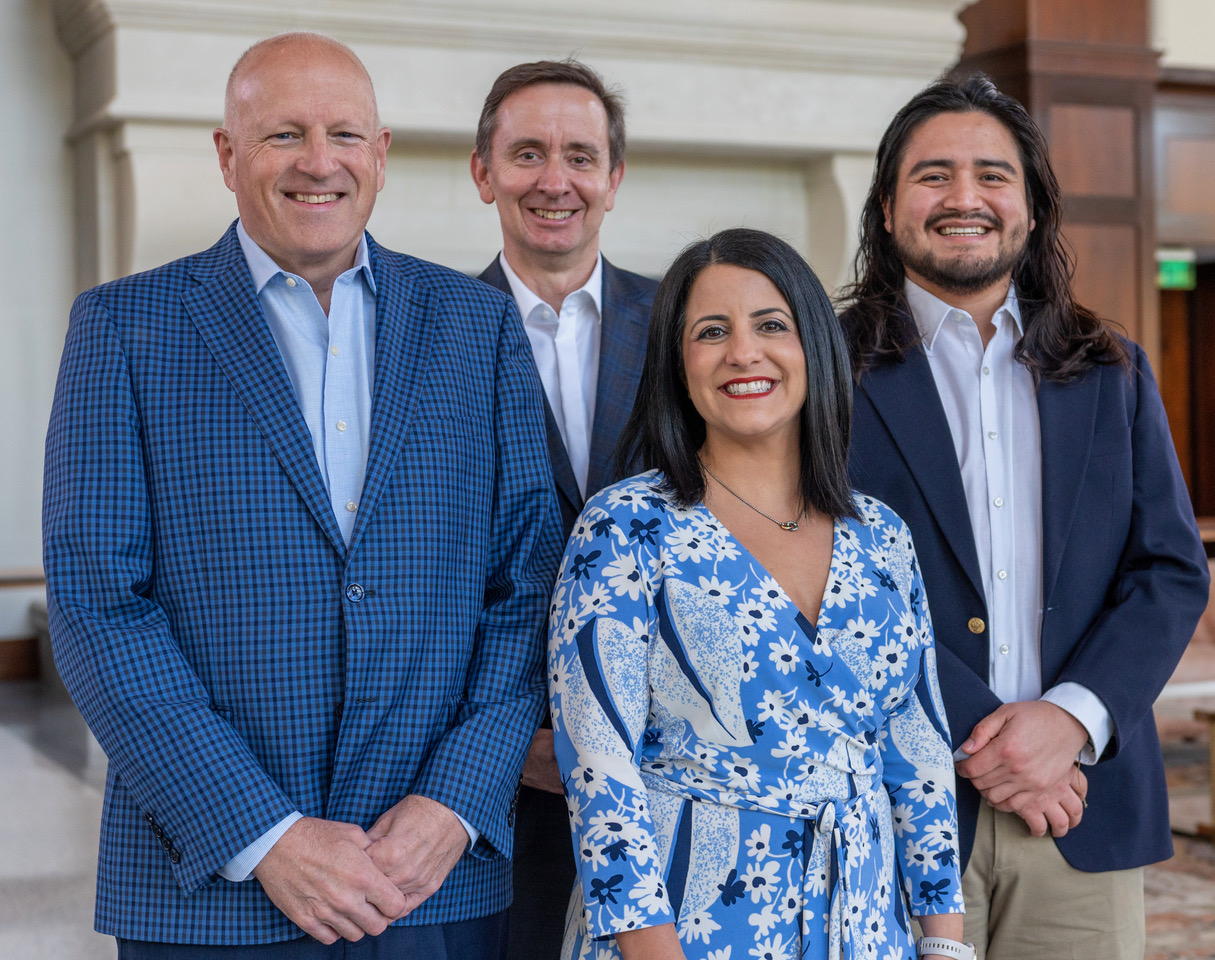
With co-authors Isis Artze-Vega and Oscar Miranda Tapia, President Emeritus Leo M. Lambert and Peter Felten, executive director of the Center for Engaged Learning have put together a practical guide for students to rely upon to find and develop powerful relationships during their college experience.
In their book 鈥�,鈥� President Emeritus Leo M. Lambert and Assistant Provost Peter Felten make the case for the transformative power of connections students make with peers, faculty and staff during college. Rooted in insights gained from face-to-face interviews with hundreds of students, the 2020 book lays clear that close relationships can drive the success of students.
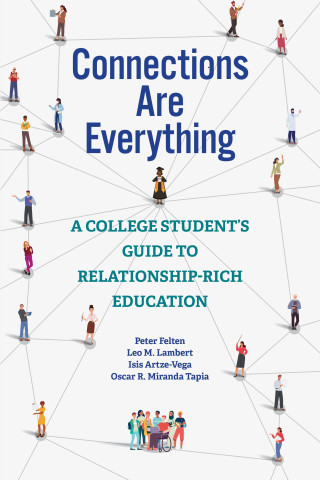 Now joined by new co-authors Isis Artze-Vega and Oscar Miranda Tapia 鈥�17, the duo has returned with 鈥溾�� published this month by Johns Hopkins University Press. If 鈥淩elationship-Rich Education鈥� defines and uplifts the destination for faculty and staff, 鈥淐onnections Are Everything鈥� provides students the map to get there.
Based on many 2021 Zoom interviews with students who experienced fruitful and powerful relationships in higher education in a wide variety of forms, the book serves as a practical guide for students who want to seek out empowering connections but may not be sure how to.
鈥淐onnections are everything because we need other human beings in our lives,鈥� Lambert said. 鈥淩esearch shows that we learn more, we are happier, we are less anxious when we are in relationship with other people. 鈥� If we can help our students understand how important human relationships are to their health, to their wellbeing, to their learning, to their happiness, college will be so much more of a valued and worthwhile experience.鈥�
鈥淐onnections Are Everything鈥� is composed of short, practical chapters that students can turn to individually as they approach the critical prospect of connecting to others during their time in college. The book is divided into three parts 鈥� Relationships and You, You Never Know Who Will Change You (or How) and You Can Do It.
The first three-chapter section focuses on what students can do to start building connections, how they can approach common challenges college students face and an examination of the strengths that students bring with them as they start pursuing a degree.
The second section looks at the types of people students interact with during their college careers 鈥� peers, faculty and staff 鈥� and how relationships with those types of individuals can transform their experiences both inside the classroom and out.
The book concludes with a section focused on empowerment. It dives into how 鈥渞elationship accelerators,鈥� mentoring conversations and constellations of connections can all contribute to deep and meaningful experiences in college and beyond.
Felten, who is also assistant provost and a professor of history, says that he hopes this book can help students have the type of college experience that he had. During his first semester, he had a professor who pulled him aside and challenged him to go beyond the pursuit of good grades to examine who he was and who he was becoming.
鈥淲hat I hope is that this book helps some students be really alert and awake to those kinds of experiences, and to seek them out,鈥� Felten said. 鈥淵ou start seeing that I can make college experiences really meaningful to me. I can challenge myself and I can grow in ways that I didn鈥檛 expect.鈥�
Lambert said that the work on these two books has underscored the reality that so many students, particularly those who may be at the margins, are just one conversation away from leaving college. For instance, first-generation college students haven鈥檛 grown up with discussions at the dinner table about attending college, and may have difficulty feeling they don鈥檛 belong because that experience is not as familiar to them. They may feel that the rules for success are written in 鈥渋nvisible ink,鈥� Lambert said.
鈥淲e tried to write this book so that we could make the invisible visible through student stories,鈥� Lambert said.
Key to the book鈥檚 impact is that it draws from the personal lived experiences of a broad range of students who bring their own diverse backgrounds to a variety of higher educational experiences. As they began building the foundation of what would become 鈥淐onnections Are Everything,鈥� the authors went beyond the ample interviews they completed for 鈥淩elationship-Rich Education鈥� and sought out institutions that had embraced the work of helping students build connections.
One of those students is Meena Alizai, a native of Afghanistan who began attending San Antonio College to pursue a nursing degree. She initially felt lost as she grappled with so many challenges new to her as a student in the United States. It was during a visit to the college鈥檚 Empowerment Center to pick up diapers for her two young children that she met a staff member there, Bertha Castellanos, who took an interest in her and would become a powerful emotional and intellectual resource for her. 鈥淚f I didn鈥檛 meet Bertha, college wouldn鈥檛 be possible for me, because she really helped me during everything,鈥� Alizai told the authors.
Alizai鈥檚 unfolding story, which pops up multiple times in the book, is just one of many that populate the work and allow students reading the book to potentially see their own backgrounds and experiences reflected in the guidance they are receiving.
鈥淚 hope that students will read this book and read the student stories and think to themselves, OK, I can do this. I may have been a little apprehensive or unsure about what these people meant about relationships and connections,鈥� said Isis Artze-Vega, provost and vice president for academic affairs at Valencia College. 鈥淏ut I hope students leave the book saying, 鈥業t does sound like relationships will make a big difference. These do seem like steps that I am absolutely capable of taking.鈥� And they can take those steps and benefit as we always do from more and deeper connections.鈥�
The insights laid out in 鈥淐onnections Are Everything鈥� are meant to be empowering so that students can see that they have the ability to build relationships themselves. Oscar Miranda Tapia 鈥�17, who served as assistant director of First-Generation Student Support Services at 黑料不打烊 and is now pursuing his doctorate in education at N.C. State University, notes that developing relationships can be daunting to many students. Realizing what they bring to the table as individuals is important, he said.
鈥淪tudents certainly bring in a lot of strengths into college, and it鈥檚 these strengths that allow them to connect and make these meaningful connections while in college,鈥� Miranda Tapia said.
The goal of the book is to provide a resource that can support students as they build these connections using their own strengths and interests, Felten said. 鈥淲e didn鈥檛 want them to have to rely on anyone else,鈥� he said. 鈥淲e wanted to make it so that if a student did come upon this book and wanted to read it themselves and put it into action, they could do just that. That鈥檚 what we鈥檙e seeking to develop in students anyway 鈥� the agency and autonomy to be an independent learner.鈥�
Published by Johns Hopkins Press, 鈥淐onnections Are Everything鈥� is available for sale, but are being made available to the public for free thanks to support from the .
To enhance the experience for readers, the Center for Engaged Learning has also created that features interviews with the authors on key aspects of the book as well as guides for each chapter that offer questions for reflection as well as activities to try that support the lessons outlined in the chapter.
Lambert offers his appreciation on behalf of the authors to those who took the time to share their stories of struggle, triumph and connection in a way that allows their experiences to empower students going forward.
鈥淲e are so grateful in 鈥楥onnections Are Everything鈥� for the dozens of students who contributed really authentic stories,鈥� Lambert said. 鈥淪tudents were so great about being authentic and vulnerable and telling us about a fear that they had, or a self-doubt that they had or an apprehension they had, and how one person oftentimes helped them transcend that doubt and land in a much better place. I don鈥檛 think there is any better way to talk about those lessons than by students telling their own personal stories.鈥�