


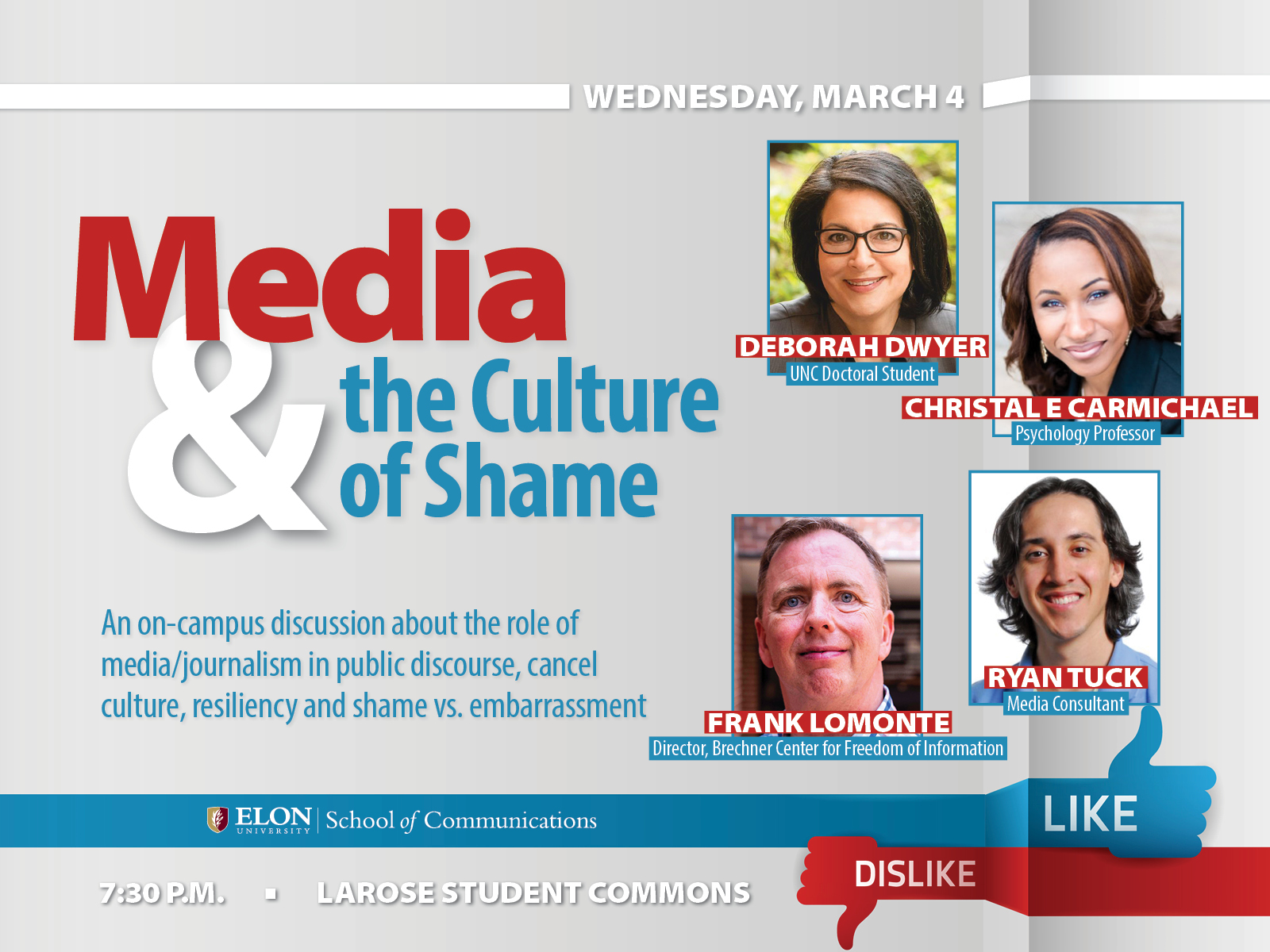
The public event, set for Wednesday, March 4, will explore today鈥檚 cancel culture, the distinction between shame and embarrassment, and the role of media/journalism in public discourse.
The School of Communications will host a topical panel discussion, titled 鈥淢edia and the Culture of Shame,鈥� delving into society鈥檚 cancel culture, resiliency, shame vs. embarrassment, and the responsibility of individuals and media/journalism in public discourse.
The public event, scheduled for Wednesday, March 4, will feature panelists with expertise in media law, media ethics, journalism鈥檚 societal role, and trends in the media and information ecosystem. It will be held in the LaRose Student Commons and begin at 7:30 p.m.
The panel will offer an important platform in light of the public response to聽聽about Kobe Bryant following his death, an August episode of the podcast Radiolab titled聽鈥�,鈥澛燼nd the debate about whether聽聽is mob mentality or speaking truth to power.
鈥淭oday, everyone is a media producer from what we post, share and like on social media,鈥� said Communications Dean Rochelle Ford. 鈥淟ikewise, those who feel embarrassed, or are the subject of shaming, need to be well equipped to be resilient and handle the consequences of their actions and the communication surrounding it. Just like companies must rebound from crises, how do we as individuals rebound? This panel will help us have an important dialogue about public discourse and cultural change.鈥�
Panelists include Frank LoMonte, director of the Brechner Center for Freedom of Information at the University of Florida, a leading source of research and expertise about the law of gathering and publishing news. Previously, LoMonte served as the executive director of the Student Press Law Center in Washington, D.C.
Deborah Dwyer, a UNC doctoral student, Ryan Tuck,聽a media consultant, and Christal Carmichael, a psychology instructor at North Carolina Central University, will also serve on the panel.
A communications professional with more than two decades of experience, Dwyer has studied journalism鈥檚 role in democracy, media ethics, and technology in the newsroom. Her doctoral dissertation examines the rising phenomenon of unpublishing requests 鈥� a result of technological change that challenges today鈥檚 newsrooms. It is titled 鈥淯npublishing the News: American perspectives on seeking truth versus minimizing harm, the impermanence of digital news, and journalism鈥檚 authority as the first draft of history.鈥�
Tuck serves as the editor of NC Local, an email newsletter funded by Democracy Fund鈥檚 North Carolina Local News Lab that covers news organizations and trends across North Carolina. He has previously worked for The New York Times, Bloomberg and several for-profit and nonprofit news organizations, exploring topics relating to revenue and audience growth to product development, user experience and digital strategy.
Carmichael is an adjunct instructor of psychology at North Carolina Central University and president and CEO of ChristalClear Worldwide, a mental health organization. In her career, she鈥檚 served as a therapist, professor and entrepreneur. She has specialized in helping people establish balance, eliminate burnout and understand the importance of mental health.
鈥淢edia organizations nationally are continuing to grapple with the permanence of the internet,鈥� said Colin Donohue, School of Communications director of student engagement and alumni relations. 鈥淧rofessionals are trying to find the balance between the public value of information and the potential personal harm to individuals. I think this panel will help illustrate why this issue is critical to the future of our media ecosystem.鈥�