


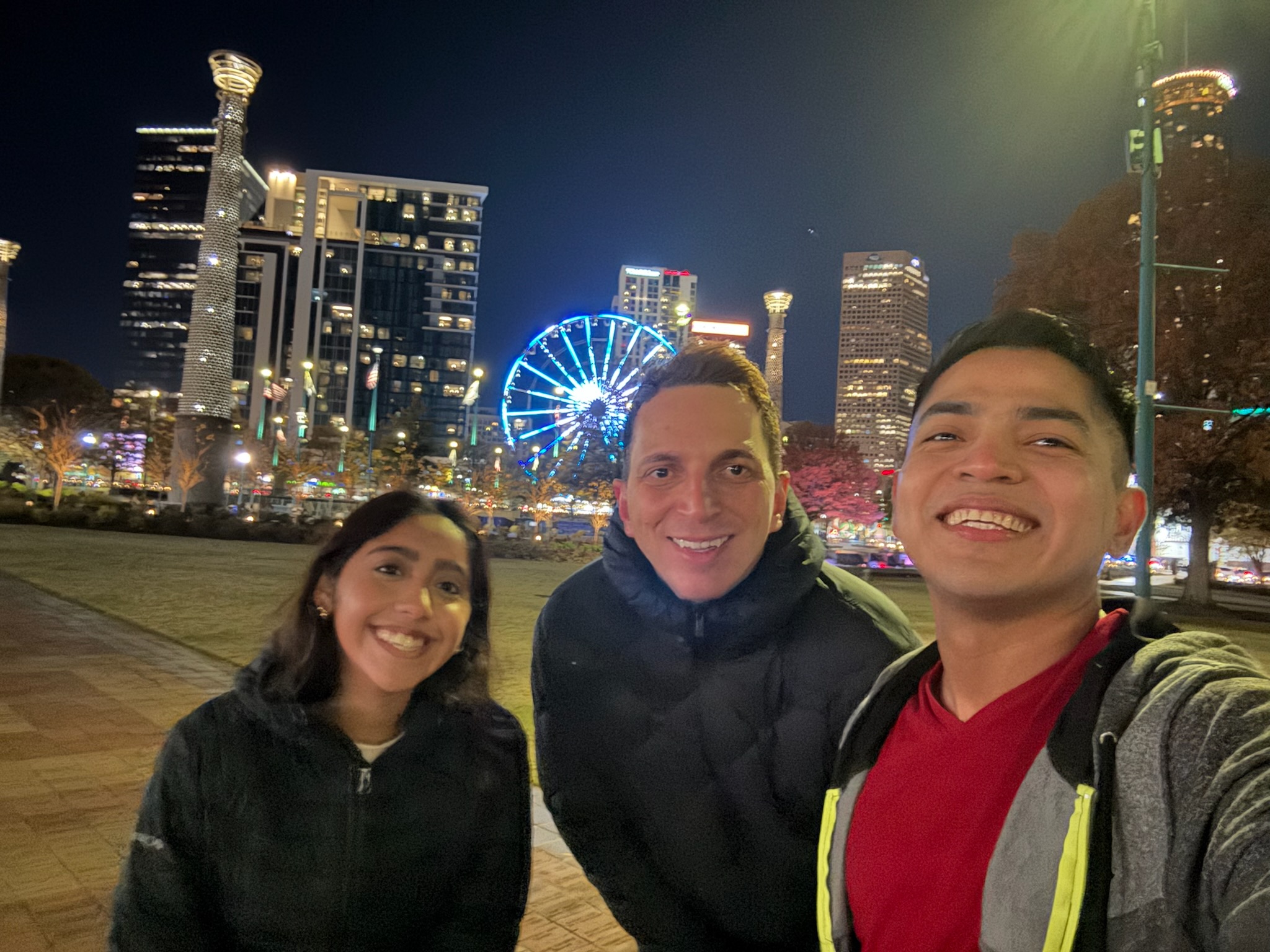
The conference, centering the theme 鈥淓mpowerment Literacies: Making 鈥楪ood Trouble鈥� that Actuates Agency,鈥� took place in Atlanta from Dec. 4-7.
Nermin Vehabovic, assistant professor of education in the Dr. Jo Watts Williams School of Education, along with undergraduate research and provost scholar Cristina Aguilar Escamilla 鈥�25, and two Master of Education alumni, Javiera Leyton Alarcon, G鈥�23, and Fernando Arevalo Rodriguez, G鈥�24, recently presented at the 74th Annual Meeting of the Literacy Research Association held at the Westin Peachtree Plaza Hotel in Atlanta, Georgia.
The conference, centering the theme 鈥淓mpowerment Literacies: Making 鈥楪ood Trouble鈥� that Actuates Agency,鈥� urged participants to draw on Congressman John Lewis鈥� charge to 鈥渘ever, ever be afraid to make some noise and get in good trouble, necessary trouble.鈥�
The Literacy Research Association (LRA) is a non-profit professional organization committed to advancing literacy theory, research and practice. As a community of scholars, LRA fosters dialogue and engagement on critical literacy-related topics, emphasizing rigorous, methodologically diverse and socially responsible research. Dedicated to supporting both emerging and established scholars, LRA promotes professional development, advocates for research-informed improvements in education and addresses key theoretical, methodological, practical, and policy issues. By disseminating high-quality research widely, LRA aims to enhance understanding of literacies across the lifespan in multicultural and multilingual contexts while mentoring the next generation of literacy scholars.
An alternative format session, titled 鈥淭raversing Borders, Cultures, and Languages: Communities, Families鈥� Homes, and Classrooms as Transnational and Translingual Sites for Practice, Policies, and Research,鈥� focused on literacy learning and practices in multicultural and multilingual settings, Vehabovic, Aguilar Escamilla, Leyton Alarcon and Arevalo Rodriguez drew on their lived experiences as educators, researchers and scholars who share transnational, immigrant and refugee backgrounds. The aim of this alternative session was to advance theoretical knowledge and understandings related to practice across community, home, and classroom contexts, as well as education policies and humanizing research.
Aguilar Escamilla鈥檚 presentation, titled 鈥淧ong谩monos Cr铆ticos: Reading Picturebooks in a Refugee-Background Family鈥檚 Home as Global Engagement,鈥� illuminated that Latinx Literacies entail (re)calling upon and (re)claiming connections to ancestors and relatives, lands, and freedom dreaming towards a promising future, as well as drawing on cultural assets and dynamic language practices and literacies to express emotions and lived experiences in a global context.
Leyton Alarcon鈥檚 presentation, titled 鈥淭ranscultural Students鈥� Responses to Translingual Children鈥檚 Literature,鈥� explored what happens when 10 kindergarten ESOL students interact with and respond to picture books. The findings were presented as four themes such as noticing embodied emotions, reading the word and the world, connecting to self and families and inquiring about geography.
Arevalo Rodriguez鈥檚 presentation, titled, 鈥淚ntertwining STEM and Bi/Multilingualism,鈥� considered how bi/multilingualism and STEM education inform his teaching and pedagogy 鈥� implying that bi/multilingual students in a 6th-grade science class are more likely to succeed due to their enhanced cognitive skills and ability to solve complex problems while using multiple languages and literacies in playful and creative ways.
鈥淪erving as the chair and discussant of this session allowed us to engage with attendees in thinking about the importance of 鈥渕ak[ing] some noise鈥� and how that informs language and literacy practices, policies and research,鈥� Vehabovic said. 鈥淚 am incredibly proud of our undergraduate and graduate students across the Teacher Education and Master of Education programs for taking up opportunities to collaborate with me and ultimately contribute to knowledge and research in the fields of literacy and teacher education. One attendee noted that they are in awe that an undergraduate student is having such a profound impact and able to contribute to the fields this early on in their academic journey.鈥�
In addition, Vehabovic also presented an individual paper titled 鈥淎udio Visual Media of Srebrenica Genocide Survivors鈥� Stories as Witness and Truthtelling: A Critical Discourse Analysis,鈥� which illuminated that 100 audiovisual media stories housed in the Memorial Center Srebrenica in Bosnia and Herzegovina foreground remembering and honoring the lost lives of our kin by centering historical truths, amplifying survivors鈥� experiences and voices and articulating societal injustices.
鈥淭his work is deeply personal to me,鈥� said Vehabovic. 鈥淚 remember when I was 8 years old and living in Germany and learned about this atrocity 鈥� hearing about it on the news. Ultimately, getting to do this kind of work is my calling and purpose and the legacy that I am creating 鈥� to pass on the truth, make some good trouble, and subsequently cultivate opportunities for healing among the next generation of equity-minded students, educators, researchers and scholars in the fields of literacy and teacher education.鈥�
Committed to the teacher-scholar model, which emphasizes the integration of teaching, scholarship, and mentorship to foster intellectual curiosity, lifelong learning and a commitment to serving the common good, Vehabovic seeks to cultivate a foundation of established knowledge while pursuing critical thinking, creative expression and interdisciplinary exploration. Research endeavors play a vital role in shaping his teaching by ensuring that the content, methods and practices Vehabovic uses in his courses across undergraduate and graduate programs at 黑料不打烊 are grounded in the latest advancements in the fields of literacy and teacher education. By integrating research and teaching, he not only enhances student learning but also models the importance of inquiry and evidence-based decision-making for current and future educators.