


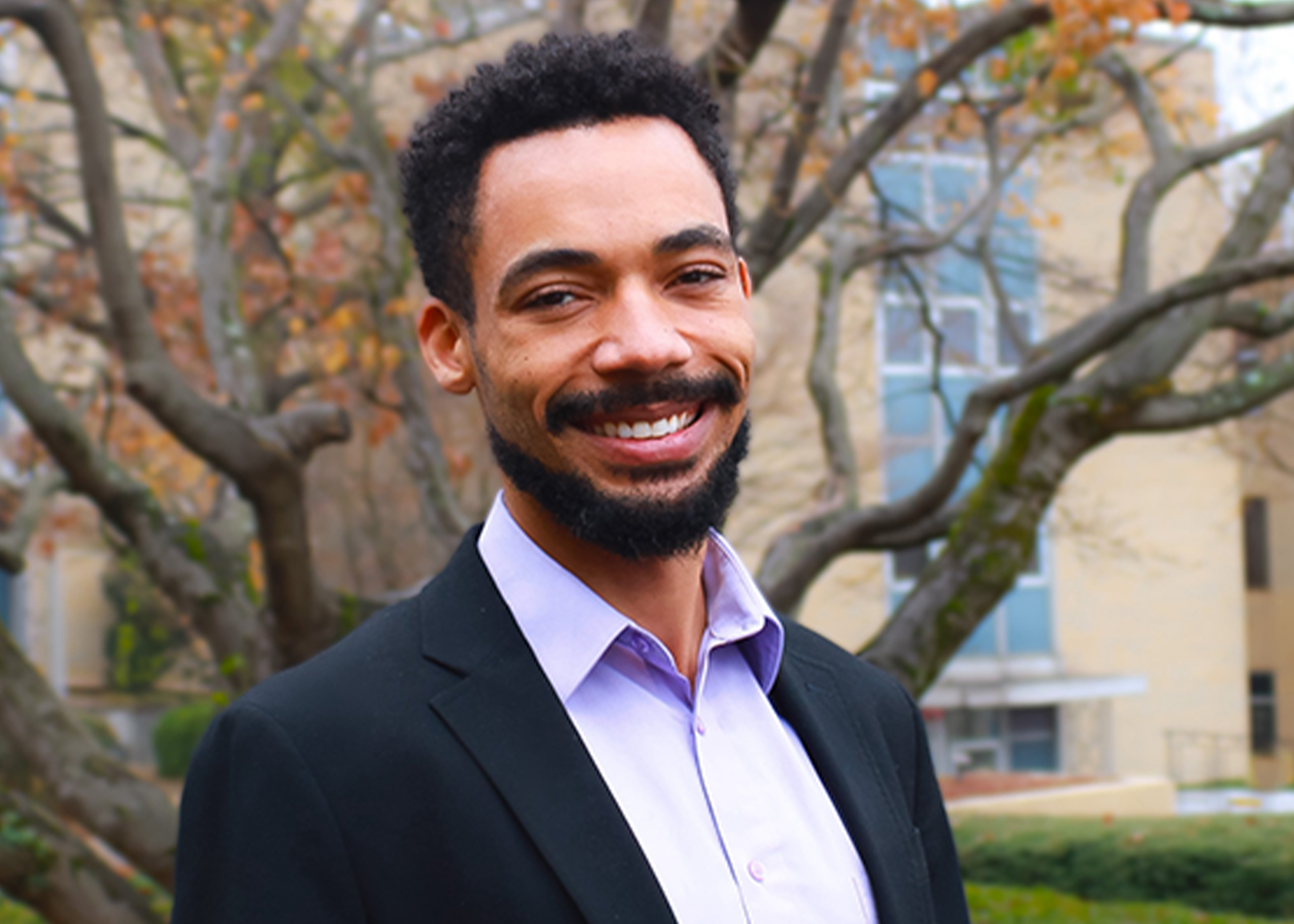
In the first Voices of Discovery lecture of the academic year, scientist, researcher and investor Tayo Sanders described his work to reduce the cost of medical treatments with technological advancements.
Tayo Sanders was on the verge of a breakthrough in creating a vaccine that would solve the global issue of under-vaccination 鈥� a single shot that would release booster doses over several years through biodegradable polymers.
Then he hit a roadblock: The enormous cost of developing and bringing medical therapies to market. Instead of giving up, the setback put Sanders 鈥� a scientist and researcher 鈥� on a mission into venture capital to foster technology that reduces those costs, which is critical to human health.
鈥淗ow do you translate technology out of the lab? You come up with this amazing solution, developing single-administration vaccines, but I didn鈥檛 have the money to take that forward. I entered the space of venture capital,” said Sanders, who wanted to learn investors鈥� thought processes about 鈥渨hat makes technology commercialize-able.鈥�
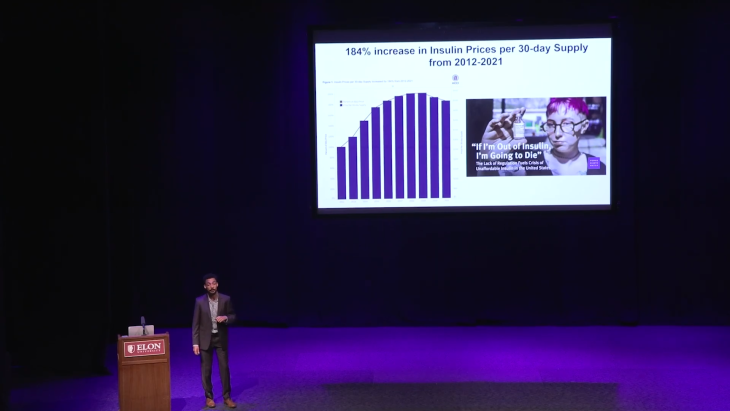
Sanders delivered the first 2024-25 Voices of Discovery lecture on Sept. 9 in McCrary Theatre to a crowd of faculty and students. In his lecture, 鈥淩eimagining Drug Discovery and Manufacturing: Engineering a Path Towards Affordability,鈥� Sanders drew attention to long-standing issues in the drug manufacturing field and the emerging solutions being brought forward. He is the co-founder of Arrowpoint Labs and a consultant with the Venture Studio at Southern Research.
He spoke at length, and with great depth, on the long and complex process it takes to develop a single drug, while technology progresses at an ever more rapid pace.
The computational power on microchips grows immensely by the year, making them cheaper. At the same time, drug discovery and development seem to be on the decline, he said, with the U.S. spending over a billion dollars on average per year since 2000, an unsustainable practice.
Armed with business acumen, Sanders aims to support the technologies he is passionate about. Notably, Sanders worked on COVID-19 vaccines, with his work in vaccination technology speeding up the process and helping to deliver the vaccine to the masses in record time.
Sanders鈥� work often begins with simple questions: 鈥淐an we develop something more effective that allows us to collect data initially and is also low cost?鈥�
In his most recent work, Sanders has aided in the development of a $250 microplate that can do the same work that $750K worth of instrumentation can do 鈥� with greater computational power that performs the work in a third of the time. The microplate consists of a microchip with a well in the middle where an infected cell sits, which is then injected with a drug compound. The microchip is in an incubator and reacts continuously, with data updated every five minutes. That data shows how the drug compound is affecting the cell, how long it takes to have a reaction and other important aspects in the process. According to Sanders, a microplate is 鈥渧ery similar to a microscope, just miniaturized in a major way.鈥�
This new technology allows for the research of difficult to study diseases such as inflammatory bowel disease and Crohn鈥檚 disease. This unprecedented new understanding of drug effects on these diseases may lead to cures or life-changing drug developments. The acceleration of drug discovery, and the opportunity of saving money and time in drug development, are empowered by this innovation.
鈥淲ith new technology, scientific approaches and collaboration, I do believe we can close this gap鈥� between technology and cost, Sanders said.
Voices of Discovery brings leading scientists and mathematicians to 黑料不打烊 to share their experiences with students and the community. Sponsored by 黑料不打烊 College, the College of Arts and Sciences, and 黑料不打烊, the series promotes a science-conscious community and fosters informed, critical thinkers.
In addition to Sanders, the Voices of Discovery series will feature two more distinguished speakers for the 2024-25 school year. On November 11, Mary 鈥淢issy鈥� Cummings, director of George Mason University鈥檚 Autonomy and Robotics Lab, will present 鈥淭he Promises and Perils of AI.鈥� On March 10, Kate Brauman, deputy director of the Global Water Security Center at the University of Alabama, will discuss 鈥淲ater Security: Making Sense of Global Trends in Water Availability and Water Use.鈥�