


In this 3000-level course, Assistant Professor of Sociology Kerem Morgu虉l explores difficult topics to help students develop the skills needed to have respectful diverse conversations.
When was the last time you had a conversation that made you uncomfortable? Why did you not feel it was OK to talk about that topic? Assistant Professor of Sociology Kerem Morgu虉l explores these and other questions as part of his course, SOC 3702A Polarization and Culture Wars.
Offered in the fall and spring semesters, the course looks at how people鈥檚 group loyalties and strong beliefs shape how politics work in the U.S. today, leading to partisan polarization and culture wars. Students are encouraged to ask tough, thought-provoking questions along the way. 鈥淎uthentic learning often requires that we leave our comfort zone,鈥� Morgu虉l says.
鈥淚t鈥檚 essential to raise civically minded democratic citizens. We need classes like this everywhere.鈥�
With a seminar structure, students are expected to read the assigned excerpt before class and come prepared to discuss it. Seats are organized in a circle, with a new student assigned the role of discussion facilitator every week. The course is divided into three parts. In the early weeks, students take time to establish ground rules, making a promise to the class to respect these rules throughout the year in order to create a brave space in which everyone feels welcome to share. Morgu虉l stresses the importance of a brave space. While a safe space implies no controversy or conflict, a brave space encourages everyone to share challenging ideas and their true opinions without fear of judgment.
鈥淚鈥檓 sure if we can sit and respectfully listen to each other with an open mind, we can learn things from each other,鈥� he adds.
From there, the course focuses on the different forms, causes and consequences of polarization in American politics in order to prepare students for conversations outside the classroom. 鈥淲hen students graduate they will join an increasingly diverse society 鈥� racially, ethnically, religiously, culturally but also politically,鈥� Morgu虉l says. 鈥淎nd in order to function well in a society like that, you need to be able to navigate these tough issues because they鈥檙e everywhere.鈥�
Students complete the course by applying the knowledge acquired throughout the semester to a variety of case studies ranging from abortion and gun control to education and white identity politics. They then interview another student who has a strong opposing opinion to theirs on one of these topics, practicing the dialogue skills acquired throughout the course in order to have a discussion on reducing political sectarianism and increasing democratic civility.
Morgu虉l says the purpose of the course is not to convince students of any 鈥渞ight or wrong鈥� or 鈥渦s vs. them鈥� ideals, but rather to give students the skills needed to have respectful diverse conversations. 鈥淵ou show that you have the skills to engage in a productive, respectful conversation with people you may disagree with, and I think that鈥檚 a very important social skill,鈥� Morgu虉l adds. 鈥淚t鈥檚 essential to raise civically minded democratic citizens. We need classes like this everywhere.鈥�
About the Professor
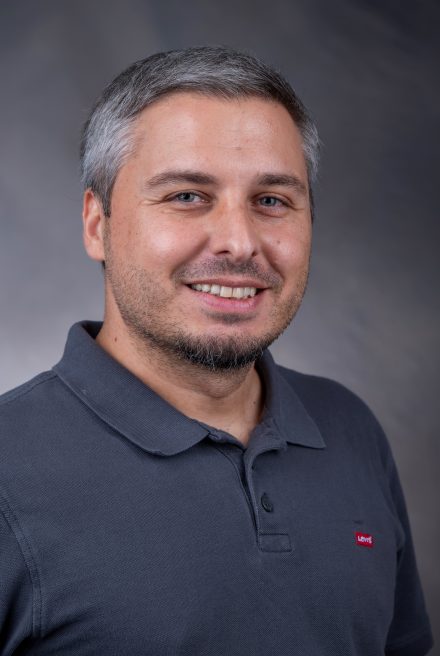
Born and raised in Turkey, Kerem Morgu虉l attributes his interest in polarization to his upbringing. Prior to 黑料不打烊, he taught a similar course at Hamilton College in New York. His research background includes social science, qualitative sociology, migration studies and cultural sociology.
Recommended Materials
- 鈥淏reaking the Social Media Prism: How to Make Our Platforms Less Polarizing鈥� by Chris Bail (2021)
- TED Talk: 鈥淭he Moral Roots of Liberals and Conservatives鈥� by Jonathan Haidt (Dec. 21, 2012)