


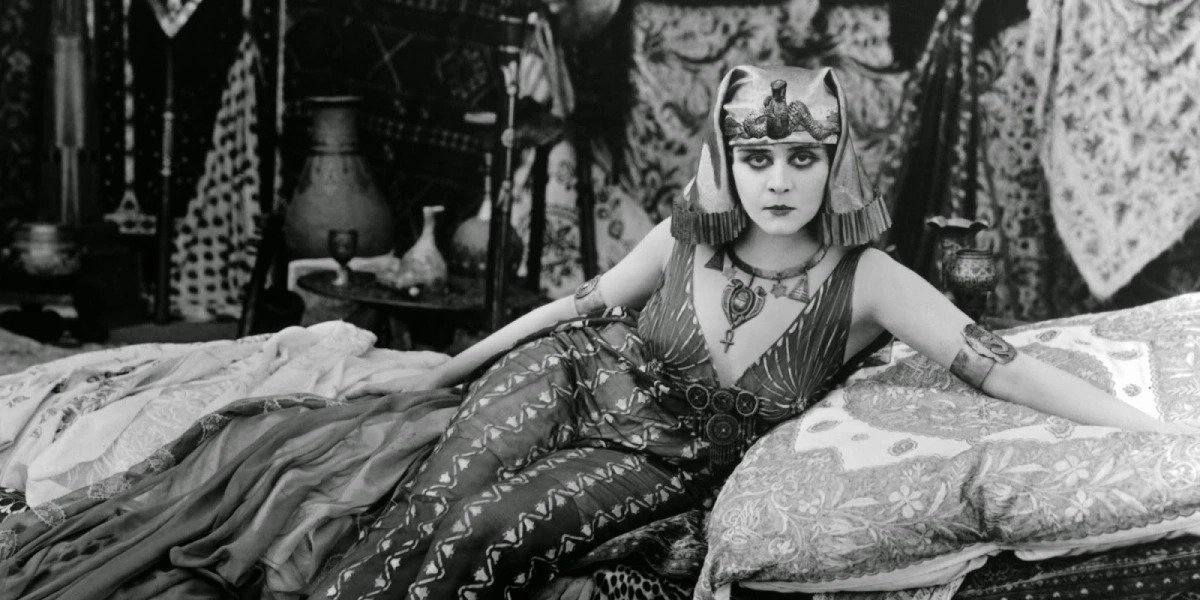
Their research, 鈥淐leopatra on Screen: How Western Biases and Orientalism Informed Early Film Adaptations of Cleopatra,鈥� examined stage and screen representations of the famous Egyptian queen 鈥� and the ideologies behind them.
On Friday, Nov. 3, classical studies major Marissa Duffield 鈥�24 presented an academic paper at the biennial meeting of the Classical Association of the Middle West and South鈥揝outhern Section (CAMWS鈥揝S), held this year on the campus of UNC-Greensboro.
Duffield鈥檚 paper, titled 鈥淐leopatra on Screen: How Western Biases and Orientalism Informed Early Film Adaptations of Cleopatra,鈥� explored stage and cinematic representations of the famous Egyptian queen and the ideologies that underpinned her depiction. Their paper originated in coursework for Race and Ethnicity in the Ancient Mediterranean World (CLA3700), taught by Assistant Professor of Classical Languages Tedd Wimperis in the spring semester of 2023.
Duffield delivered their presentation as part of a panel on Classical Reception, one of four papers engaging the afterlife of Greco-Roman culture in modern contexts. Duffield鈥檚 study examined a series of early stage and screen representations of Cleopatra, ranging from Victorian burlesque shows, through silent films, up to her 1963 portrayal by Elizabeth Taylor, and traced the origins and evolution of her characterization as an alluring but deadly temptress from a fantastical, mysterious East. Duffield analyzed these representations through the interpretive frameworks of orientalism and feminist critique: they rooted this stereotypical construction of Cleopatra in ancient Roman propaganda that painted Cleopatra as a threat to the Roman Empire and an exotic eastern seductress. This politically motivated caricature of the queen was repeated by ancient historians and poets, serving to cement this image in the historical imagination. More recently, during the time of the British Empire, Cleopatra again came into vogue as a dangerous symbol of Oriental exoticism and sexually unrestrained femininity, and this representation then became standard in her early Hollywood depictions in the following decades.
Duffield鈥檚 research on Cleopatra aims, as stated in their paper, to identify inaccurate and harmful stereotypes from the past, as part of important efforts to deconstruct Eurocentric and misogynistic images of women that still survive today. They are currently pursuing this interest in ancient representations of women further with a senior research project (co-directed by Kristina Meinking and Tedd Wimperis) on the role of the Vestal Virgins, a community of prominent Roman priestesses, in Rome鈥檚 imperial ideology.