



Faustin and co-authors focused on the importance of mixed methodologies to better study health trends and issues in the Black diaspora for "Black Women's Reproductive Health and Sexuality: A Holistic Public health Approach."
Assistant Professor of Public Health Studies Yanica Faustin recently published a chapter in a book for researchers and practitioners about Black women鈥檚 reproductive health.
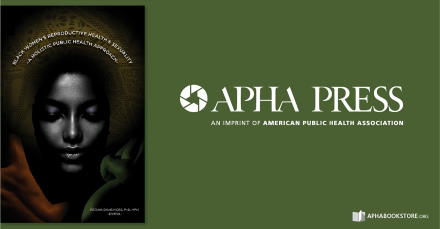
鈥淏lack Women鈥檚 Reproductive Health and Sexuality: A Holistic Public Health Approach,鈥� was edited by Regina Davis Moss and published by the American Public Health Association鈥檚 APHA Press in August. Faustin鈥檚 chapter, 鈥淲e are not a Monolith: Nativity, Racial Discrimination, and Maternal/Infant Health Across the Black Diaspora,鈥� was co-authored with Kristin Z. Black,聽assistant professor of maternal and child health and health behavior at the University of North Carolina鈥檚 Gillings School of Public Health, and Jon Hussey, assistant professor of maternal and child health at the University of North Carolina鈥檚 Gillings School of Public Health.
 Their chapter focuses on the importance of using both quantitative and qualitative methodology and using an interdisciplinary lens to approach public health research involving Black maternal health. Their research examined health disparities among the Black diaspora in New York City with attention to where residents were born 鈥� in the U.S., Africa or the Caribbean 鈥� and how the duration of their residence in the U.S.聽and exposure to racial stress聽impacted the odds of preterm delivery.
鈥淢uch of my work highlights the fact that there is less research on the smaller but growing population of Black foreign-born women giving birth in the United States. Studying their outcomes has the potential to reveal new insights into the etiology of US racial and ethnic health inequities more broadly,鈥� Faustin said.
Faustin and co-authors stress that considering nativity in research may inform more robust data collection and tailored interventions聽for Black birthing persons, showing聽that while Black birthing persons are at an increased risk of experiencing both general and pregnancy-related discrimination, the health impact of racial stress varies聽based on region of origin.
鈥淏lack Women鈥檚 Reproductive Health and Sexuality鈥� aims to remedy the underrepresentation of Black women in reproductive and sexual health research while providing a comprehensive guide to the field of Black women鈥檚 reproductive health and sexuality, including its history and future. Its audiences include academic researchers, research institutes and public health practitioners.
鈥淭he chapter provides an overview of the relationship between nativity, racism and maternal health,鈥� Faustin said, while 鈥渁lso providing lessons learned that can be incorporated into health policy development, data collection practices and methodological approaches to health inequities research.
鈥淩eaders will learn that while all Black persons face the oppressive systems that exist, there is variation in the resulting health outcomes within this population. It鈥檚 important to include the diversity of experiences within the Black population that lives in the United States where these racial maternal health inequities persist.鈥�