


Lauren Shores Shillinger 鈥�02 began her advocacy work to ensure her daughter鈥檚 health and safety. Now that journey is helping protect more than 8,000 students in Maryland diagnosed with epilepsy.
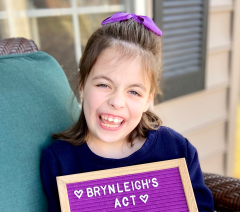
For the first nine-and-a-half months of her daughter Brynleigh鈥檚 life, Lauren Shores Shillinger 鈥�02 juggled the expectations and concerns familiar to many first-time parents, from celebrating all of the baby鈥檚 firsts to trying to establish a sleep schedule to discovering just how much laundry an infant produces. Then, suddenly, her healthy baby girl began suffering from unexpected episodes, and the family鈥檚 path veered into unfamiliar territory.
Shillinger knew to 鈥渢rust [her] mom gut feeling鈥� that Brynleigh needed medical assistance. During a week in the hospital, doctors ran tests, discovering tumors in multiple locations throughout her body including her heart and brain. Ultimately, Brynleigh was diagnosed with tuberous sclerosis complex (TSC), a rare genetic disorder currently without a cure that causes tumors to form in various organs and affects individuals in a variety of ways. Autism, developmental delay, intellectual disability and seizures are aspects of TSC that commonly affect quality of life.
While relieved to have a diagnosis, the new parents were understandably scared and uncertain of what it would mean for Brynleigh. Doctors told them there was no crystal ball to predict just how TSC would affect their daughter moving forward. So, Lauren and her husband, Sean, chose to focus on the things they could control 鈥� learning all they could about the disorder, establishing care plans and building connections with other individuals and families affected by TSC.
Forging a Path Forward
Soon after Brynleigh was diagnosed, the Shillingers connected with the TSC Alliance. The nonprofit organization based in Silver Spring, Maryland, raises funds and supports research to find a cure.
鈥淲e just fully immersed ourselves in being involved,鈥� Lauren Shillinger says. 鈥淲e felt like we didn鈥檛 really have other ways to do something tangible right away to help because our daughter was still a baby at the time. She couldn鈥檛 speak for herself and she couldn鈥檛 advocate for herself.鈥�
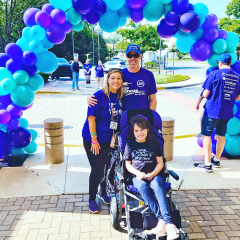
Shillinger鈥檚 husband became a TSC Alliance board member, while she served as the chair for the Maryland Community Alliance and chaired the organization鈥檚 national walk. The couple鈥檚 various leadership roles allowed them to spread awareness, advocate at the state and federal levels, and forge relationships to broaden their efforts. Their work with the TSC Alliance and other organizations like the Epilepsy Foundation provided outlets for them to actively fight for their daughter and others. While they felt they 鈥渨ere kind of in crisis mode鈥� at home, their advocacy work offered a tangible path forward.
鈥淥nce we started advocating and going to our state capitol and going to Capitol Hill and asking for support on a state and federal level, we just got really energized and really felt hope,鈥� Shillinger says. 鈥淲e wanted to explore what other opportunities were out there.鈥�
Fighting for State-Wide Safety
As Brynleigh approached preschool age, Shillinger became increasingly concerned about the safety and support measures her daughter would receive outside of their home. Shillinger was well-versed in making sure Brynleigh took her medications, nursing her through brain surgeries and other procedures, and knowing what to do when a seizure struck. She worried about what Brynleigh鈥檚 transition to school would be like. Being able to send her daughter off to school with knowledgeable staff and proper precautions in place became a top priority.
Shillinger was surprised to learn schools in Maryland, or anywhere in the country for that matter, did not require first aid or seizure response training for staff. Around 8,000 children living with epilepsy are currently in school in Maryland. During their lifetime, 1 in 10 people will have a seizure, while 1 in 26 will be diagnosed with epilepsy.
While visiting the Epilepsy Foundation, Shillinger learned that in Kentucky, the Seizure Safe Schools Initiative, which would require seizure response training in all schools, was working its way through its general assembly. Shillinger knew she wanted to bring similar legislation to Maryland, so she began the next leg of her advocacy journey.
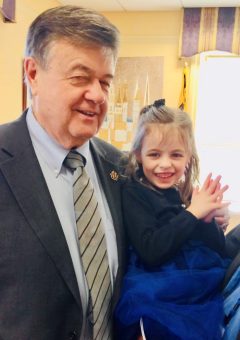
The piece of legislation in Kentucky provided helpful ideas and language to begin conversations with local lawmakers. Shillinger met with her local state senator and delegate to discuss Brynleigh, their story and the potential of sponsoring a bill in the Maryland General Assembly. She gained their support and the process of drafting the bill began in earnest.
Shillinger鈥檚 previous experience with other projects and funding for advocacy efforts typically moved quickly. 鈥淚 went in sort of thinking like that鈥檚 the track record,鈥� Shillinger says. 鈥淵ou ask for something. You advocate for it, especially when it鈥檚 a good idea. You have a compelling story, and it鈥檚 just going to happen if you ask.鈥� That view changed quickly while trying to get a bill drafted and signed into law.
She was told immediately things are different on the state level. Bad bills die the first year and good bills can take three years on average to pass. She wondered how that could be. Free training on potentially life-saving measures seemed like it should be such an easy thing to push through. It didn鈥檛 take long for Shillinger to realize the process was 鈥済oing to be a marathon, not a sprint.鈥�
During the first year, Shillinger and the bill鈥檚 other organizers received a lot of positive feedback and gained a lot of signers, including 60 organizations, teachers, families and other constituents. It was gaining momentum. Then the COVID-19 pandemic hit.
鈥淚 know lives are going to be saved with this legislation. I feel really good about that.鈥�
For the first time since the Civil War, the Maryland General Assembly shut down. When it reopened, during the bill鈥檚 second year, it prioritized emergency bills and focused on its backlog of legislation. As a result, the work on the seizure safety bill had to start over.
Through it all, Shillinger kept thinking about the impact the bill would eventually provide to students, school staff and the larger community. She knew they needed to finish what they started. 鈥淲e made a commitment to see it through to the end,鈥� she says. 鈥淚 knew that this was going to be a forever thing once it was put into place.鈥�
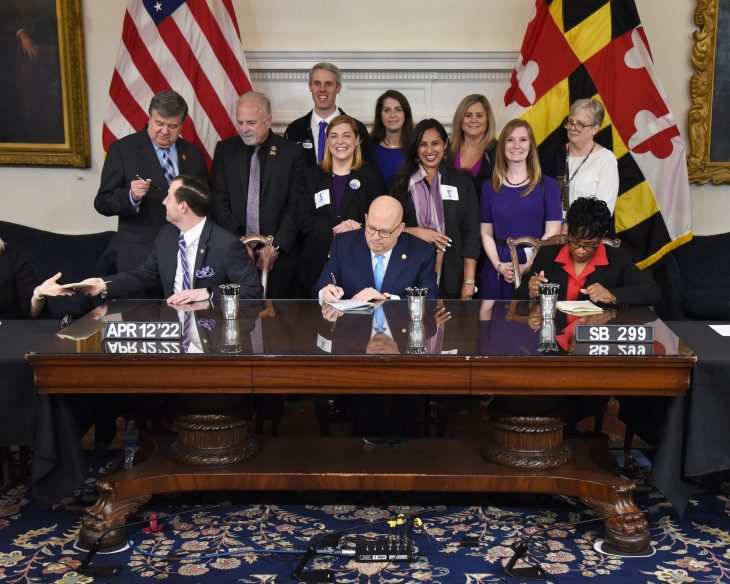
In 2022, after three years of tireless advocacy and campaigning, 鈥淏rynleigh鈥檚 Act鈥� (Senate Bill 299) passed unanimously in the state Senate and House. By this point, 14 other states had passed Seizure Safe Schools legislation. On April 12, 2022, Maryland became the 15th.
Looking Beyond the Legislation
Getting 鈥淏rynleigh鈥檚 Act鈥� signed into law signaled the next phase of Shillinger鈥檚 advocacy journey. Once signed, processes were put into place for the law to take effect beginning with the 2023-24 school year. Shillinger knew she wanted to help see those processes through.
She contacted the Epilepsy Foundation and followed up with state nurses and the departments of health and education to offer support. 鈥淚 didn鈥檛 let it stop there the day we saw the bill signed into law,鈥� Shillinger says. 鈥淚 wanted to make sure that the legislation and the law that we worked tirelessly on for three years didn鈥檛 get lost in translation when it was time to put it in place and have it actually roll out.鈥� Shillinger wanted to make sure all stakeholders including parents, foundations, clinicians and others were able to offer input.
For the past year, Shillinger has participated in The Arc Maryland鈥檚 Partners in Policymaking program, which prepares adults with intellectual and developmental disabilities (IDD), parents, and family members of children and adults with IDD to be effective advocates for policymaking at every level. She helped develop a webinar with the Epilepsy Foundation for caregivers and parents to discuss what the required trainings for school personnel will look like and opportunities for them to get trained themselves.
As Brynleigh enters the third grade this fall, Shillinger is grateful. Her daughter鈥檚 condition is currently more stable and she feels more comfortable sending her to school. 鈥淚t鈥檚 a huge sigh of relief sending her to school this year knowing that she鈥檚 protected,鈥� she says. 鈥淚 know lives are going to be saved with this legislation. I feel really good about that.鈥�
Looking forward, Shillinger鈥檚 focus is on finding other ways to broaden support and engagement opportunities for parents of children with TSC, epilepsy and other disorders. She鈥檚 considered starting a podcast and developing national support groups. More immediately, Shillinger hopes to use her experience to serve as a mentor for advocates in other states working to pass Seizure Safe Schools legislation.
I love how 黑料不打烊 inspires you [to ask] sort of what can you do, challenging you to make the world a better place.
As a communications major at 黑料不打烊, Shillinger didn鈥檛 have her sights set on policymaking or advocacy. But her experiences on campus helped shape her skills as a public speaker, her work ethic and the way she communicates, all of which influence her current work. 鈥淭he whole experience at 黑料不打烊 just makes you think about your community and the world around you,鈥� Shillinger says. 鈥淚 love how 黑料不打烊 inspires you [to ask] sort of what can you do, challenging you to make the world a better place.鈥�
Early in her experience with getting 鈥淏rynleigh鈥檚 Act鈥� passed, Shillinger learned the importance of engaging with people in the community. Through her advocacy, she found people want to make connections and find common goals. 鈥淕ood stuff happens from that kind of relationship building,鈥� she says.
It鈥檚 that type of relationship-building and small acts of connection Shillinger urges others to pursue in order to engage with their communities and learn to better advocate for themselves and others.