


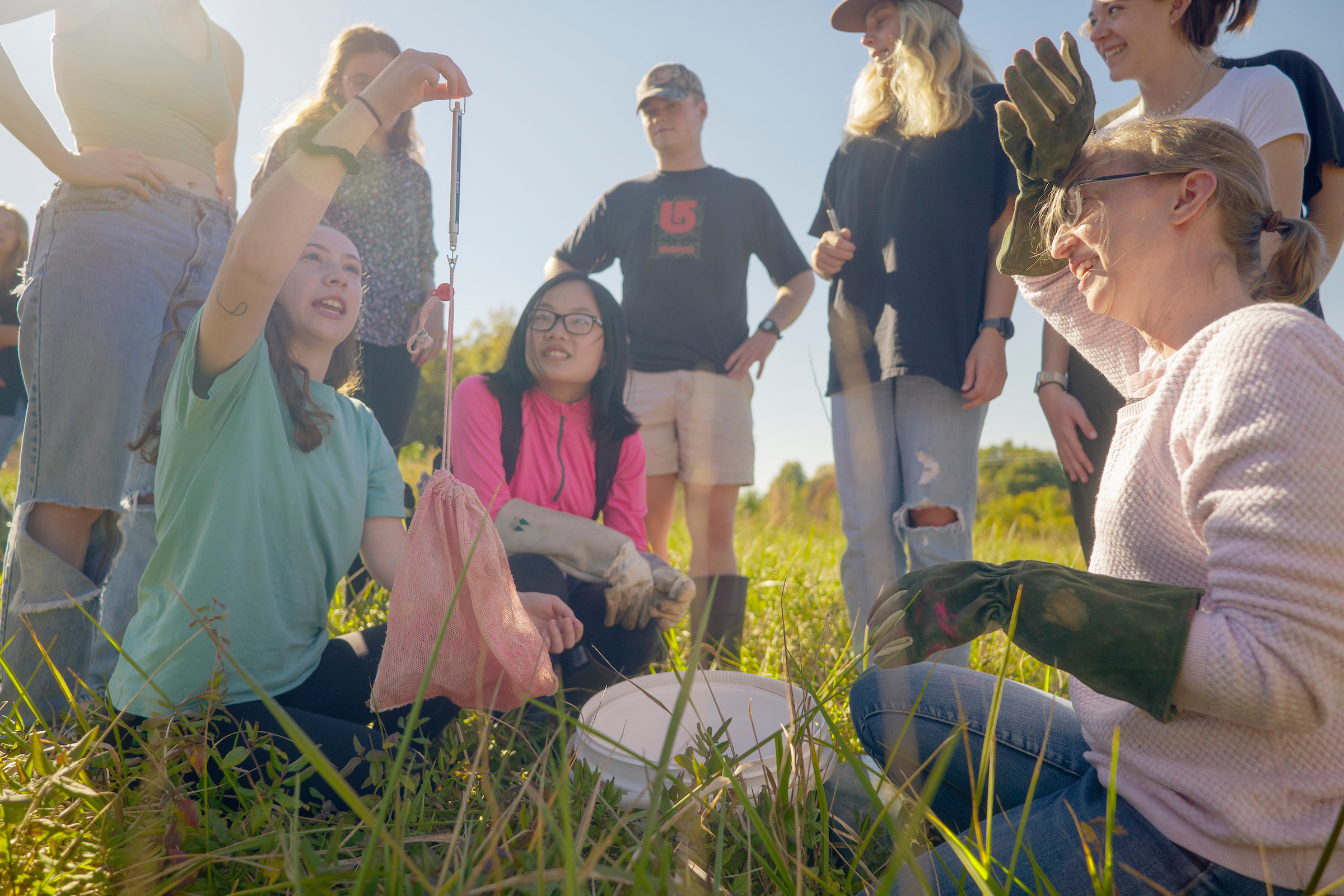
Associate Professor Amanda Chunco's Wildlife Ecology lab class ran field studies for half the semester at Loy Farm looking to collect data on rodents and small animals.
When it comes to studying wildlife, sometimes what you don鈥檛 find is as important as what you do.
Over five weeks this fall semester, students in ENS 3300 Wildlife Ecology course tried, and tried, and tried again to capture and study field rats and other small animals in the field behind Loy Farm. Their goal was to collect data on the animals鈥� species, size and weight to use in lab activities before releasing them back into their brushy habitat. The exercise is a standard lab activity each semester it鈥檚 taught.
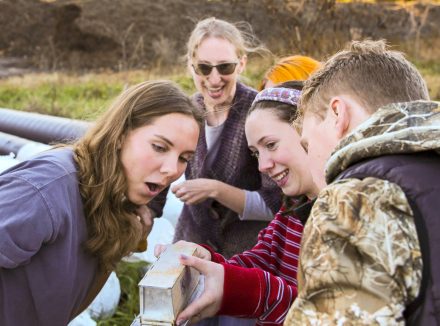
Week after week, it was the same routine.
Each Monday morning around 8:30 a.m., a small team arrived with Associate Professor of Environmental Studies Amanda Chunco to set more than two dozen humane traps along rows in the knee-high grass. They returned with around 10 more of their classmates at 3:30 p.m. to check the traps 鈥� only to find them barren.
鈥淲e鈥檝e never not caught a rat,鈥� Chunco said in disbelief the afternoon of Oct. 24. 鈥淚n the past, we鈥檝e caught too many, 25 or 30, and by the end of the class we鈥檙e just releasing them because we鈥檝e run out of time and we already have the data we need.鈥�
Each week, the curiously empty traps made them more determined to try again. 鈥淲e can try again next Monday if you want to,鈥� Chunco would announce to a chorus of yeses in response.
It wasn鈥檛 all fruitless. In the first week, they found a foot-long juvenile rat snake, which they measured and released.

鈥淲hat鈥檚 more fun than catching rats and snakes?鈥� Emma Kaminsky 鈥�25 asked. 鈥淓ven when we didn鈥檛 catch anything, it was still exciting to set and check the traps.鈥�
The serially empty traps led to discussions about the ebb and flow of animal populations, hypotheses about an increase of predators like hawks or even fire ants around campus, and other possible explanations why they weren鈥檛 catching the usual rats, mice and shrews.
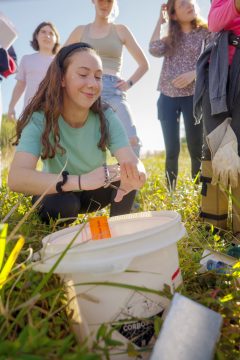
For those environmental studies majors in the class, it was a preview of what future field research could entail.
鈥淭his is how it actually is in real life. Things go wrong or they don鈥檛 happen the way you expected. Wildlife research isn鈥檛 exactly a very funded field, and it鈥檚 a career where you have to try and try again or run studies with the bare minimum,鈥� said Wyatt Payne 鈥�23.
Those barren traps also made room for students to explore topics and subjects they might not have otherwise. Some fun facts gathered this semester: Shrews must eat every two hours to survive; fish can hear; spiders dream.
鈥淚 learned a lot about experimental design. For instance, we read a whole study about track tubes, so then we got to make them and put them out here to see if we find anything,鈥� said Megan Green 鈥�23. They set those tubes coated at each end with red and blue dye to track small mammals鈥� movements on the farm. 鈥淓very lab I鈥檝e ever taken has been so structured, so the freedom to study what we want and try what we want has been such a good experience. It makes it really fun that Dr. Chunco allows us to study what we鈥檙e interested in.鈥�
鈥淚t鈥檚 been great to take such an experiential class as a senior,鈥� said Madison Eaton 鈥�23. 鈥淲e鈥檝e discussed so many potential career paths in this class, and it鈥檚 been such a cool way to explore those options now that I鈥檓 thinking about life after 黑料不打烊.鈥�
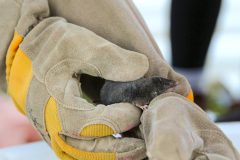
On Monday, Nov. 28, it finally happened. A very hungry shrew was inside a small trap in the drying grass, a tiny DeKay鈥檚 brown snake was found near the traps, and 鈥� jackpot! 鈥� a hispid cotton rat.
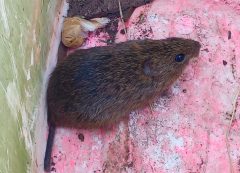
They measured the snake. They quickly processed the shrew to release it for survival. They deposited the fuzzy, brown rat into the bottom of a tall, white trashcan and donned leather gloves to handle it safely. The scale and other data collection tools were at hand.
As students reached inside to collect the quite perturbed rodent, it scrambled through their hands and leapt for freedom, disappearing in the tall grass and safe seclusion beneath a pile of farm supplies.
鈥淗e bested us all,鈥� came a student鈥檚 reluctant admission.
鈥淥h yeah, he had some fire in his eyes. I could see it.鈥�