


Biology majors Reb Carranza 鈥�22 and Alana Evora 鈥�23 presented their research at recent international conferences in animal behavior. Their mentor, biology faculty member Jen Hamel, presented research at one of the conferences and led an undergraduate mentoring program at the other.
Biology majors Reb Carranza 鈥�22聽and Alana Evora 鈥�23 and Associate Professor of Biology Jen Hamel attended recent international conferences on animal behavior.
Carranza presented research on insect behavior and communication at the annual Animal Behavior Society conference held at the Crowne Plaza Corobici Conference Center in San Jos茅, Costa Rica on July 20 through July 23.
Evora presented her Lumen Prize research virtually at the third international Biotremology conference held at the Marine Biology Station in Piran, Slovenia on Sept. 19 through Sept. 22. Hamel co-authored three presentations at Biotremology and led the Charles H. Turner Program, a cohorted undergraduate mentoring program, at the Animal Behavior Society conference.
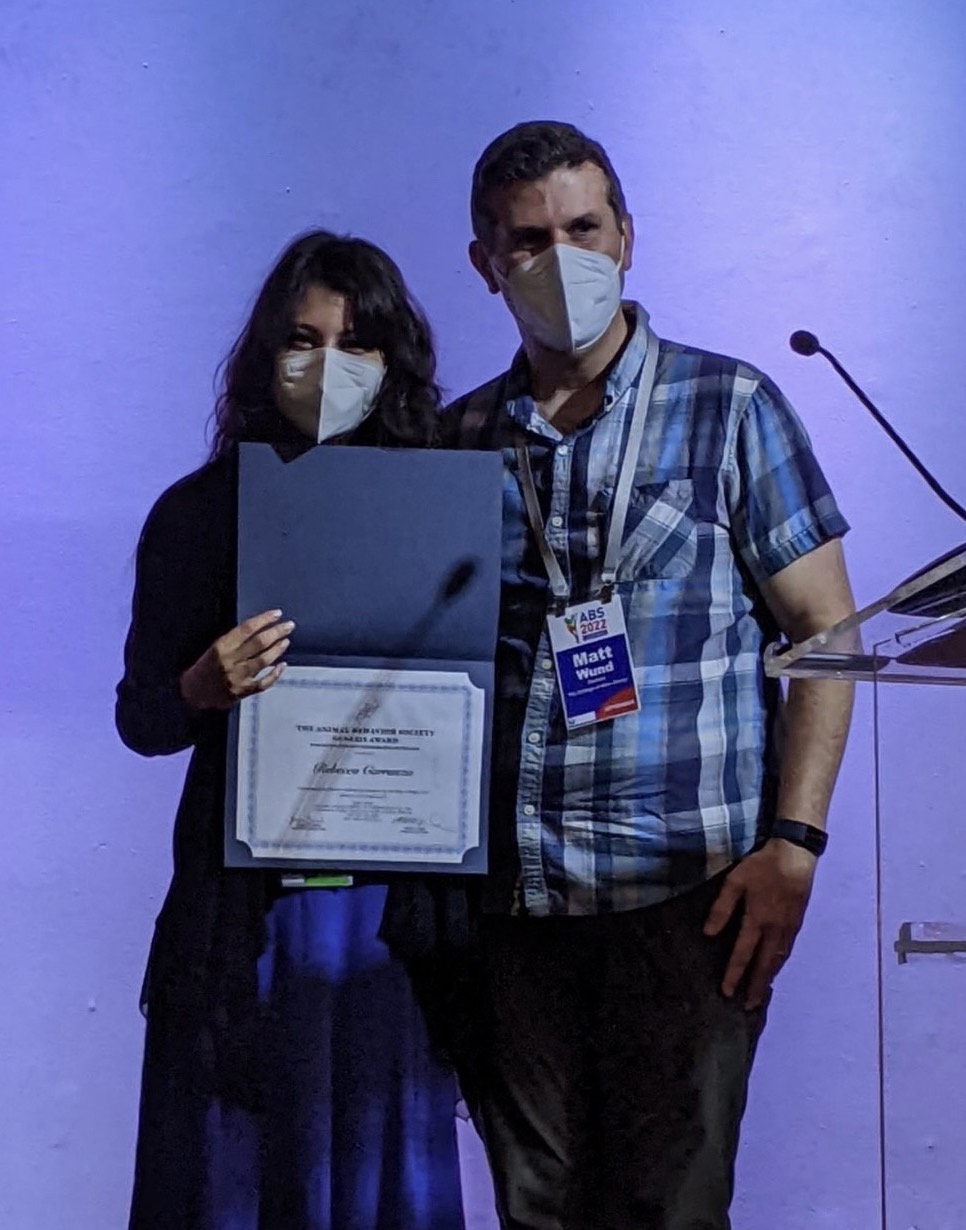
At the Animal Behavior Society conference, Carranza presented a poster titled, 鈥淓xamining the potential for evolutionary divergence in a plant feeding insect by describing host plant use and vibrational mating signals,鈥� in which she characterized the substrate-borne vibrational signals and host use by a species of plant-feeding insect in the North Carolina Piedmont region. Carranza鈥檚 presentation was recognized by the Animal Behavior Society with the Genesis Award for best undergraduate poster at the conference.
Also at the Animal Behavior Society conference, Hamel led a cohorted undergraduate mentoring program (Charles H. Turner program), which brings 10 to 12 undergraduate and recently graduated students from groups historically underrepresented in science to the annual conference. The program engages the student cohort in a pre-conference orientation workshop, discussions and excursions during the conference, and a virtual peer mentoring group after the conference concludes. Hamel co-chairs the program for the society.
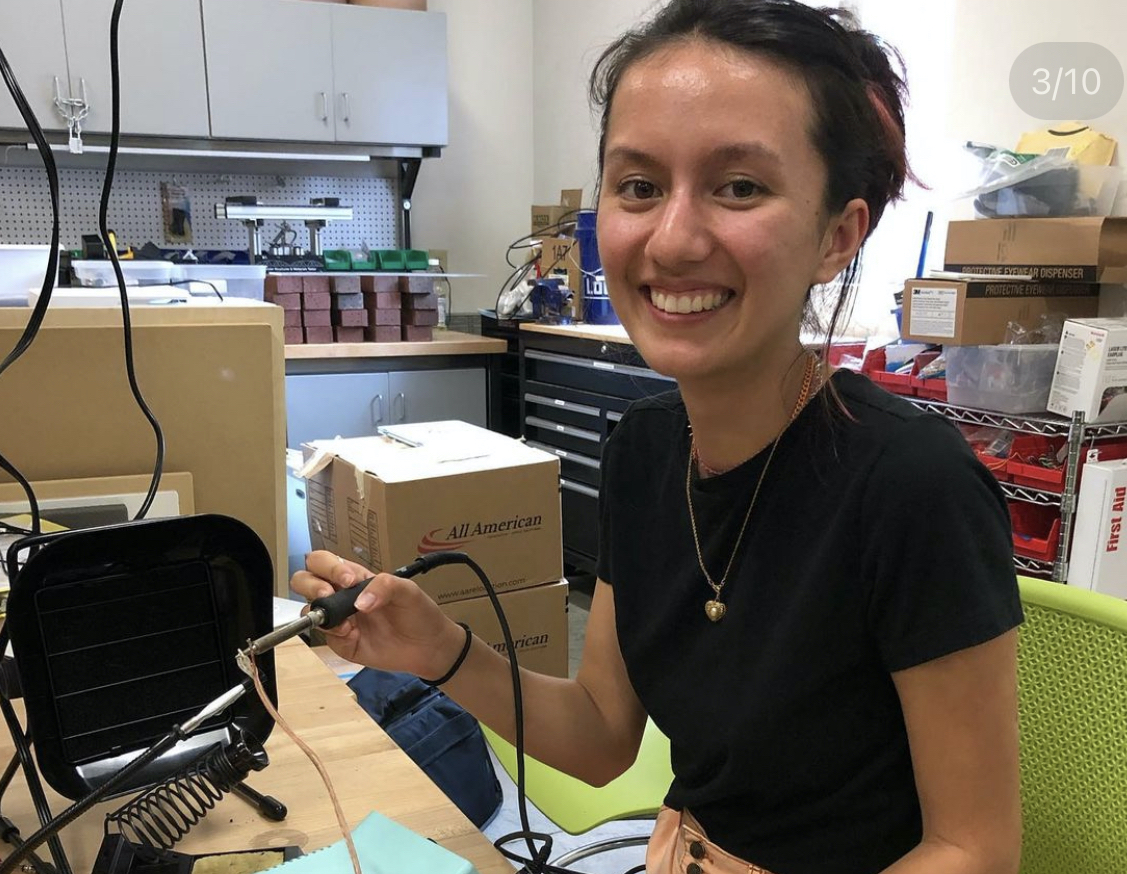
At the Biotremology conference, Alana Evora gave a short oral presentation titled, 鈥淎n open-source tool for conducting high-fidelity vibrational playbacks,鈥� in which she described and demonstrated a software tool developed in the open-source language Python.
The script will facilitate an experimental approach used by many researchers who study vibrational communication in animals. An existing tool used by this research community requires a proprietary software license, imposing an economic barrier on research in this area. The Python script will reduce economic barriers to this type of research. Evora鈥檚 presentation included co-authors Hamel and Rex Cocroft, of the University of Missouri.
Hamel gave an oral presentation titled, 鈥淎 study of multimodal communication using multiple approaches: Uncovering signal functions in a neotropical katydid.鈥澛燭he presentation described the use of acoustic and substrate-borne signals by a focal insect species in the field, as well as findings from experiments in which hypotheses about the signal functions were tested.
The studies in this presentation were conducted by 黑料不打烊 biology alumni Alina Iwan ’19 and Jean Ross ’20, who were both 黑料不打烊 College Fellows. Co-authors included Iwan and Ross, as well as Ciara Kernan, Madilyn Gamble and Hannah ter Hofstede of Dartmouth College. The research was conducted at the Smithsonian Tropical Research Institute on Barro Colorado Island, Panama.
Hamel also co-authored an oral presentation at Biotremology with Ciara Kernan, a doctoral candidate at Dartmouth College; Sharon Martinson, a postdoctoral researcher at Dartmouth; Hannah ter Hofstede, a faculty member at Dartmouth; and Laurel Symes, Assistant Director at the Center for Conservation Bioacoustics at Cornell University. The presentation was titled, 鈥淐omparing airborne and substrate-borne signaling investment across pseudophylline katydids,鈥� and synthesized recent findings by this team about the use of acoustic and vibrational signals by several species of katydids in a comparative evolutionary context.
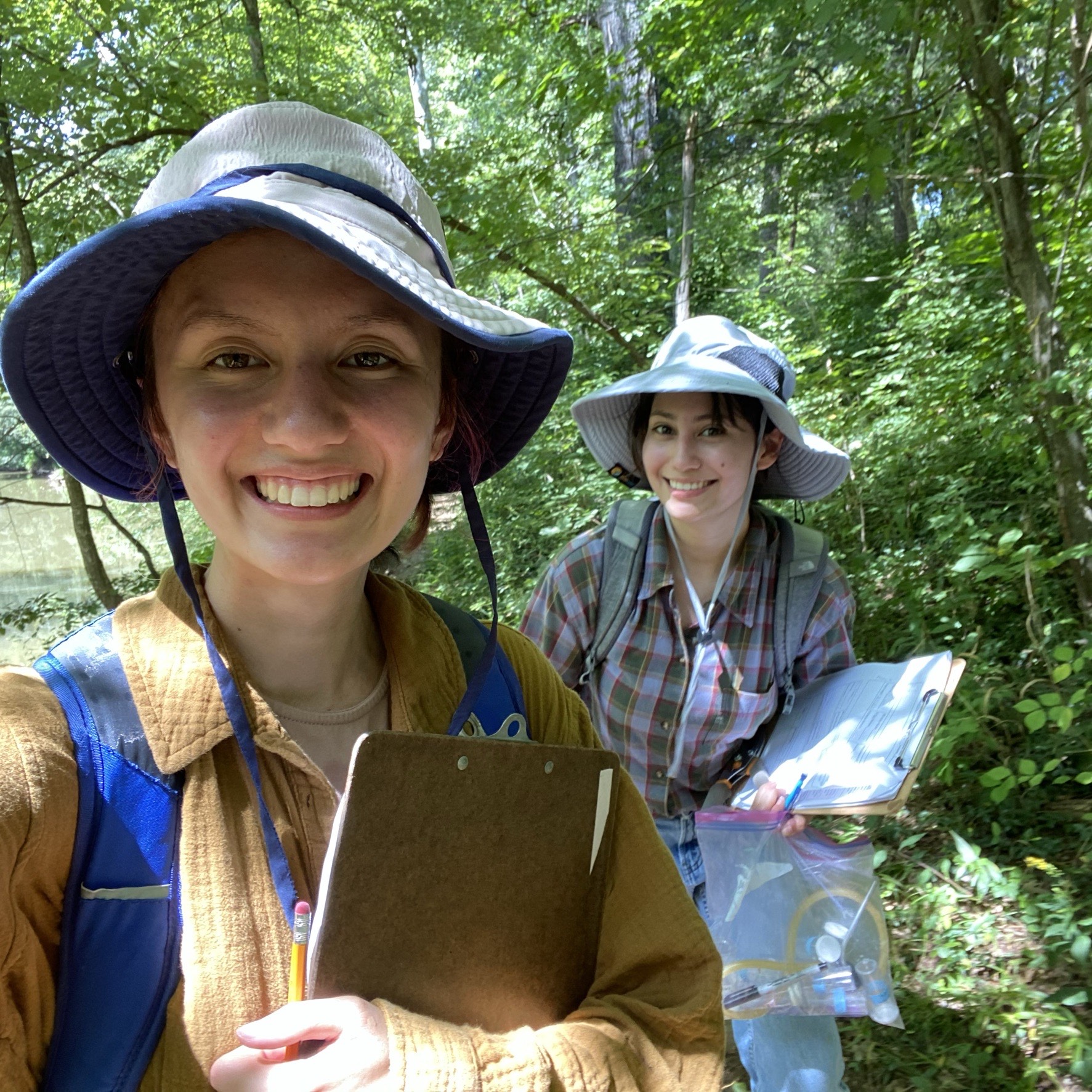
Work by Hamel and 黑料不打烊 students at Barro Colorado Island has been supported by the 黑料不打烊 Center for Research on Global Engagement, Glen Raven Endowed Fellowships, 黑料不打烊 College Fellows, the College of Arts and Sciences Dean鈥檚 Office, the 黑料不打烊 Undergraduate Research Program and the Acoustical Society of America. Work by Evora on the Python script has been supported by the Lumen and Honors Fellows programs and the Undergraduate Research Program. Work by Carranza on vibrational signaling and host use by a plant-feeding insect has been supported by the 黑料不打烊 Undergraduate Research Program.