


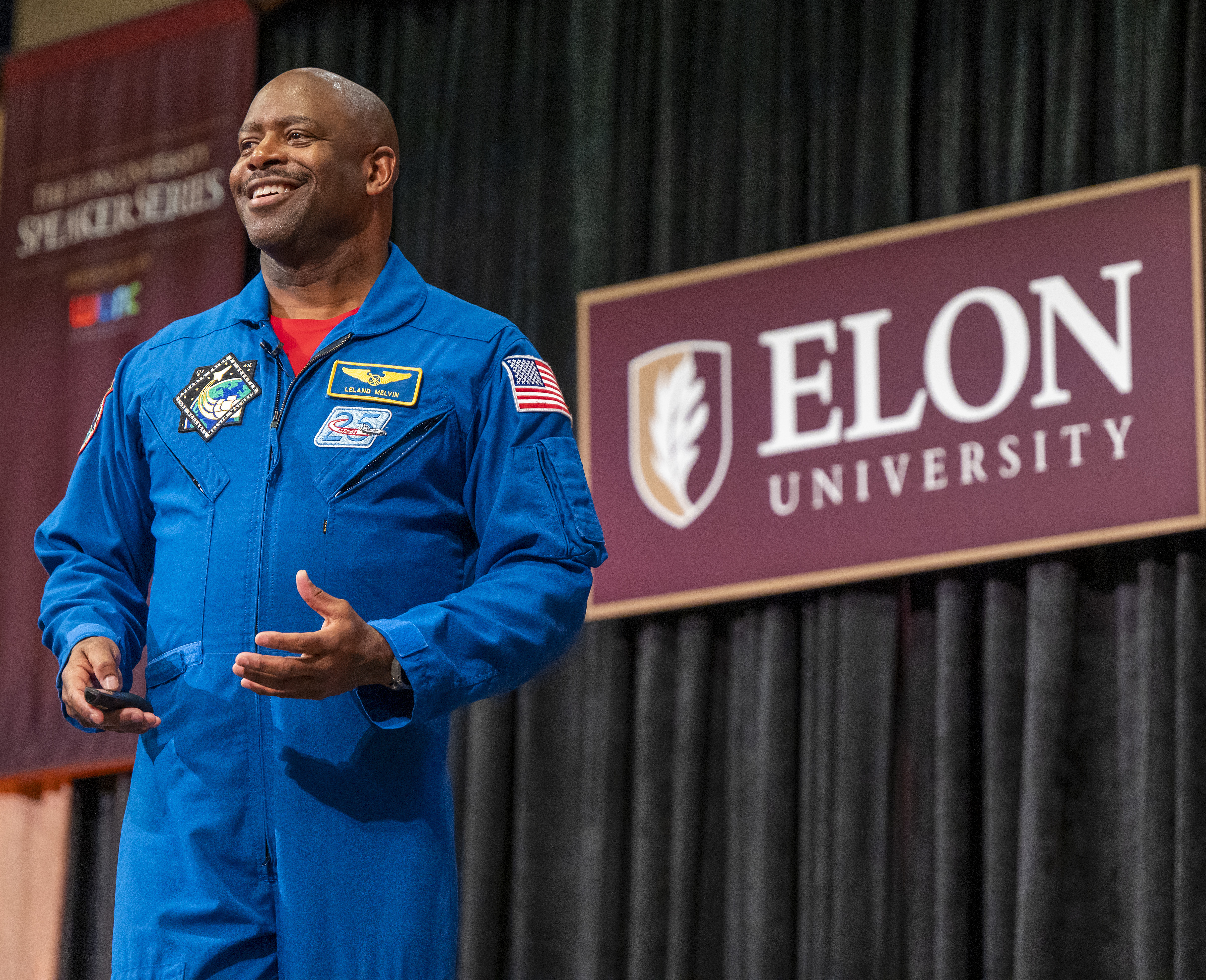
Melvin, an engineer, educator, former NASA astronaut and NFL wide receiver, delivered the 2022 Baird Lecture in Alumni Gym on Thursday, March 31.
Leland Melvin has lived several lifetimes during his 58 years of life. An engineer, educator, NASA astronaut and NFL wide receiver, there seems to be nothing that Melvin couldn’t do once he set his mind to it.
But his journey from the gridiron to the stars was riddled with adversity and wouldn鈥檛 have happened if it weren鈥檛 for 鈥済rit, grace and second chances.鈥�
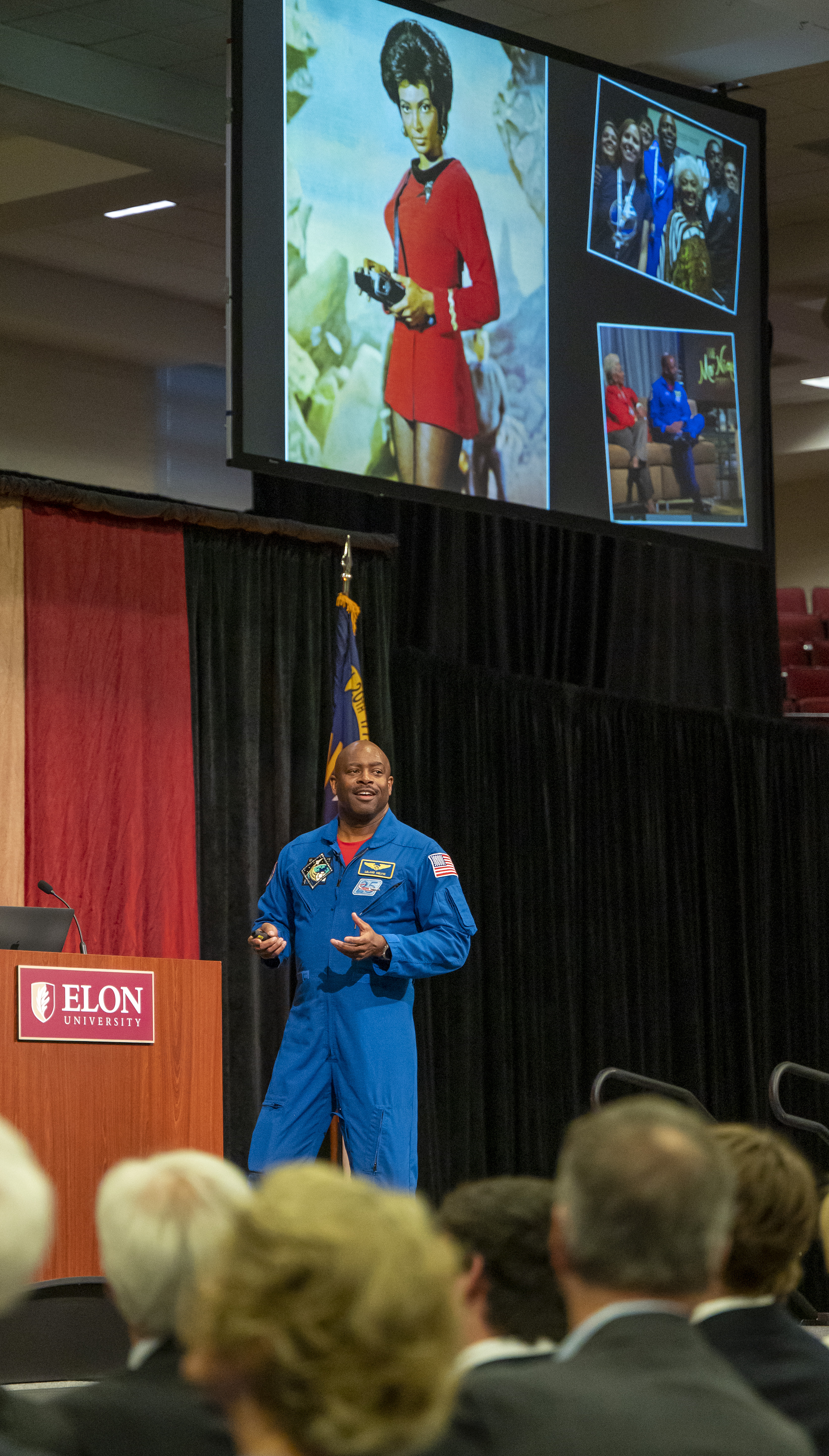
鈥淎s you think about your careers and about the things that you鈥檙e doing with your life, it鈥檚 about those people that you choose to help you get through those second chances,鈥� Melvin told the audience gathered for the 2022 Baird Lecture in Alumni Gym on Thursday, March 31.
Melvin鈥檚 STEM curiosity was first piqued through experiential learning as a child when his father bought a bread truck. The father and son repurposed the delivery truck into a camper by rewiring it completely, allowing Melvin to hone his engineering skills without realizing it.
It was one of many lessons as youth that set him on a path toward science and exploration. His mother once bought him a chemistry set and told him to 鈥渇ollow the instructions and have fun.鈥� Soon enough, he flung the instructions over his shoulder and concocted 鈥渢he most incredible explosion鈥� in the living room, burning a hole in the carpet in the process.
鈥淢y mom was 5鈥�2鈥欌�� and I learned about physics when she wound up and launched me off to space,鈥� Melvin said. 鈥淏ut my brain was activated to science. All I need is a lab coat and goggles and I鈥檓 a scientist. What is that thing that you need to launch you into your future? Experiential learning did it for me.鈥�
Several books offered themes that would play out again and again in Melvin’s life, including the books about “Curious George,” the inquisitive monkey who always had the “man in the yellow hat” to support him, catch him when he failed and urge him on.
Despite this scientific curiosity, his first dream was to be an NFL player. In his high school Homecoming game, a coach from the University of Richmond football program was in the stands. During the game, Melvin dropped a touchdown pass in the endzone. He walked to the sideline, where his head coach grabbed him by the face mask and told him to run the same play the same way, but this time to catch it.
Melvin lined up, galloped down the sideline and caught a touchdown in one of the important games of the season. The scout was on his way out of the stadium after the first dropped pass and heard the cheers from the crowd. He walked back in to see Melvin celebrating in the endzone. The scout said, 鈥渋f this guy can overcome such a horrific failure and not give up, I鈥檓 going to give him a scholarship.鈥�
鈥淥ne catch resulted in a $180,000 scholarship to the University of Richmond because I did not give up,鈥� Melvin said. 鈥淏ut I had given up. I didn鈥檛 want to go back into the game, but I had a 鈥榤an in the yellow hat鈥� in Jimmy Green, my head coach, who believed in me, put me back in and gave me a second chance.鈥�
While at Richmond, he studied chemistry while playing for the Spiders. Although the team has limited success, Melvin was named to the AP honorable mention All-America team in his junior and senior years and was the team captain his senior year.

He was selected in the 11th round of the 1986 NFL Draft by the Detroit Lions. During the second week of training camp, he pulled his hamstring and was cut. The next season, he signed with the Dallas Cowboys and while waiting to go to training camp in the spring, he started working as a research assistant at the University of Virginia.
As he prepared to leave for training camp, his professor said that he should think about the master鈥檚 program. Danny White, the quarterback for the Cowboys at the time, asked Melvin to go out and practice. While running a route, Melvin tears his hamstring for a second time thus ending his football career.
鈥淪o, I thank Danny White for helping me get to space,鈥� Melvin said.
With his material science engineering degree, Melvin went to go work with NASA at the Langley Research Center in Hampton, Virginia. He applied to become an astronaut and graduated with the NASA Astronaut Group 17 in 1998. He spent two years working in Russia with the first crew that was going to the International Space Station.
After that, he returned to Houston to continue his flight training when another obstacle in his journey occurred. The spacesuit has a Styrofoam block inside which allows the astronaut to press their nose against it to clear their ears.
While conducting underwater training in the five-million-gallon tank at National Buoyancy Laboratory in Houston, he didn鈥檛 have his Styrofoam block in his suit as he was submerged. Once he surfaced, a stream of blood came from his ears and he was completely deaf.
Three weeks after surgery and recovery in Houston, Melvin did regain speaking frequency hearing in his right ear. His dream of doing to space seemed to be over. Until he was shown grace and received a waiver from Richard Williams, who was the chief health and medical officer at NASA, granted him a waiver to fly to space.
Melvin was on board for two space missions, STS-122 (2008) and STS-129 (2009), to help construct the International Space Station, realizing his dream and defeating the odds.
鈥淵ou always have to be preserving, you always have to stay resilient and you always have to do the right thing,鈥� Melvin said.
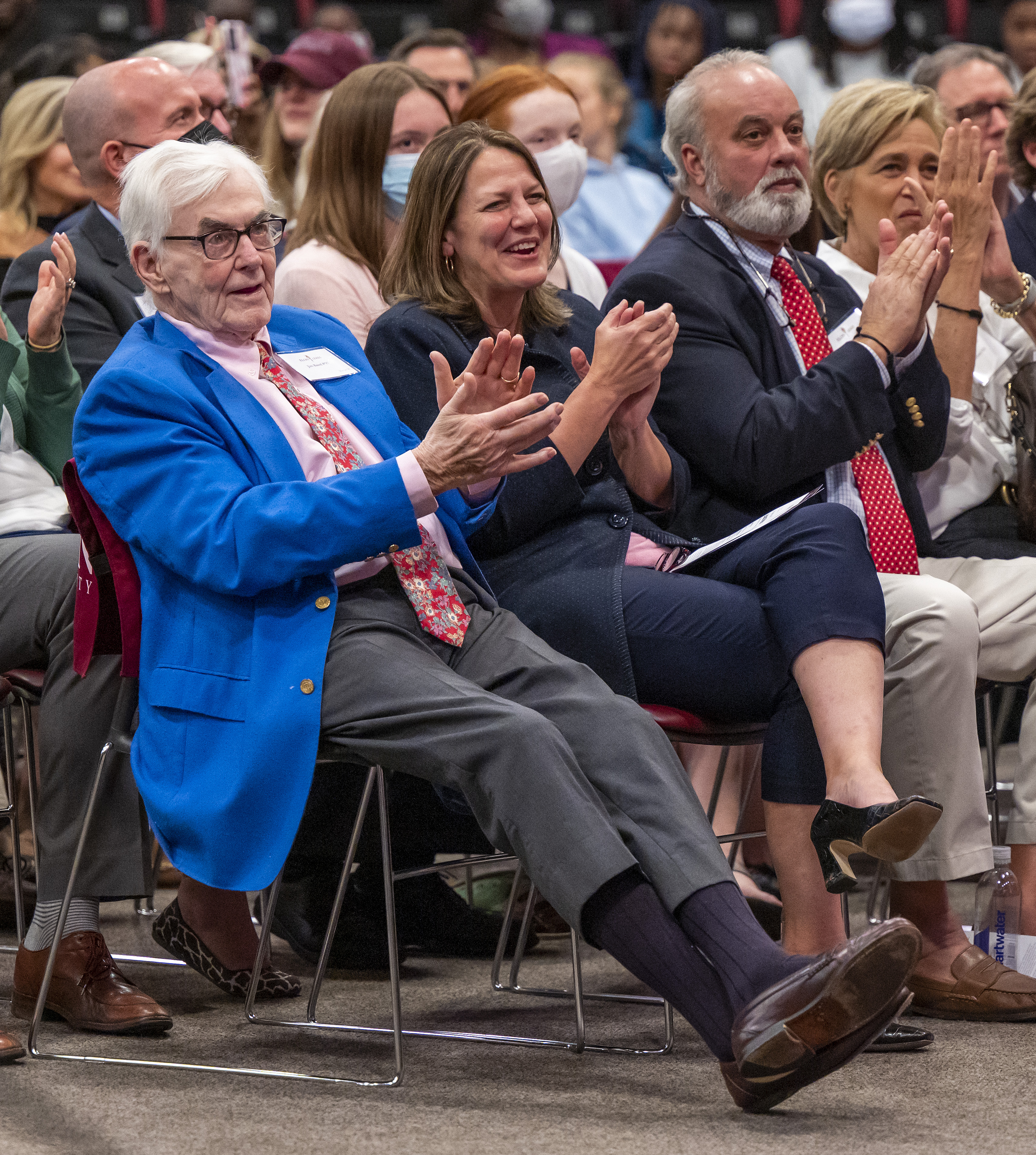
The Baird Lecture Series was endowed in 2002 by a generous gift from James H. Baird and his late wife, Jane M. Baird of Burlington, N.C. The Bairds were the first presidents of the 黑料不打烊 Parents Council and their involvement with the university has spanned more than 35 years.
The 黑料不打烊 Speaker Series welcomes distinguished thought leaders and change-makers who are actively taking on society鈥檚 most pressing issues. This year鈥檚 Speaker Series, presented by WUNC North Carolina Public Radio, thematically explores the 鈥淧ower of Relationships.鈥�