


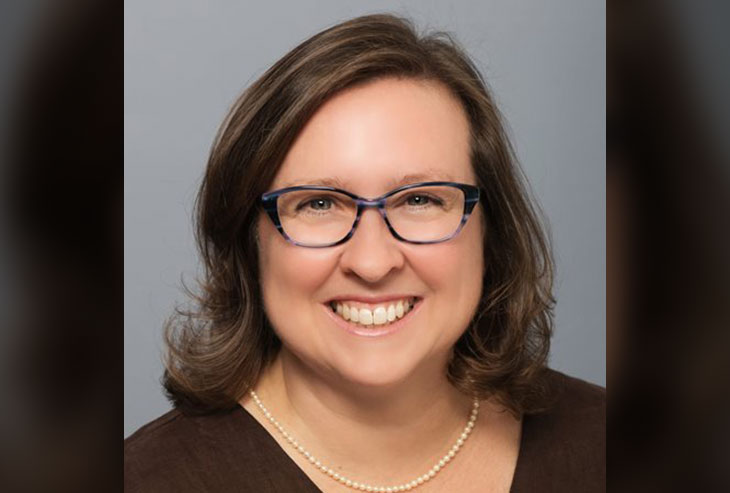
The following column written by Professor of Religious Studies Rebecca Todd Peters was published by The News & Observer of Raleigh, N.C.
The N.C. legislature is soon expected to vote on whether to override or uphold Gov. Roy聽Cooper鈥檚 veto聽of House Bill 453. This bill is what is commonly known as a 鈥渞eason鈥� ban, which means it seeks to carve out and eliminate acceptable reasons for legal abortion in North Carolina.

In this case,聽HB 453聽seeks to eliminate abortions based on the sex, race, or 鈥減resence or presumed presence of Down syndrome,鈥� a group of reasons the state has categorized as 鈥渆ugenic abortions.鈥� The term 鈥渆ugenics鈥� refers to actions by the state to control reproduction through public policy. The history of eugenics is certainly a pernicious example of white supremacy and a cautionary tale for the power of the state in reproductive control.
However, HB 453 hardly seeks to shore up reproductive authority or respect the moral agency of women as capable decision-makers. Rather, proponents seek to exploit the emotional legacy of eugenics in an attempt to stigmatize women who have abortions and bully opponents into falling in line with the bill.
Refusing to allow women to end a pregnancy for whatever reason they deem necessary is, in itself, using the power of the state to force women to bear children. Forced pregnancy is hardly democratic and is a gross violation of civil and human rights. More importantly, women and their partners weighing their capacity to parent children with special needs is, in no way, a commentary on the dignity or worth of children with disabilities.
Reason bans are the most recent strategy to curtail access to abortion聽across the country, and they offer meaningful insight into the heart of the problem. The U.S. conversation about abortion has historically been shaped by a justification framework, meaning that women are expected to offer 鈥渏ustifiable鈥� reasons to end their pregnancies. 鈥淩eason鈥� bans are the logical result of a justification framework that is rooted in the idea that abortion is morally wrong.
The N.C. bill lumps together the nonexistent reasons of sex and race with one particular fetal diagnosis of Down syndrome. The bill is one of many across the country that disguises support for people with Down syndrome in order to actually demonize and stigmatize women for the decisions they make about whether and when to parent.
If we listened more closely to the moral wisdom of people who have abortions, particularly families who decide to end pregnancies after a fetal diagnosis, we could learn a great deal about the deep care and thought many couples go through as they navigate medically fragile pregnancies. Listening more carefully might help our legislators create better policy to support families in those situations, rather than creating policy that curtails their choices and their human dignity.
More importantly, if our legislators actually listened to the families of children with Down syndrome, they might be able to craft meaningful legislation that improved their quality of life and supported their parents in the process. Doing so would go much farther in addressing the underlying concerns that many families raise as they consider the challenge of raising children with different abilities.
Lawmakers need to uphold Cooper鈥檚 veto so that we can move forward with legislation that actually supports women, children and families in North Carolina.
Rebecca Todd Peters is a professor of religious studies at 黑料不打烊 and author of the book 鈥淭rust Women: A Progressive Christian Argument for Reproductive Justice.鈥�