


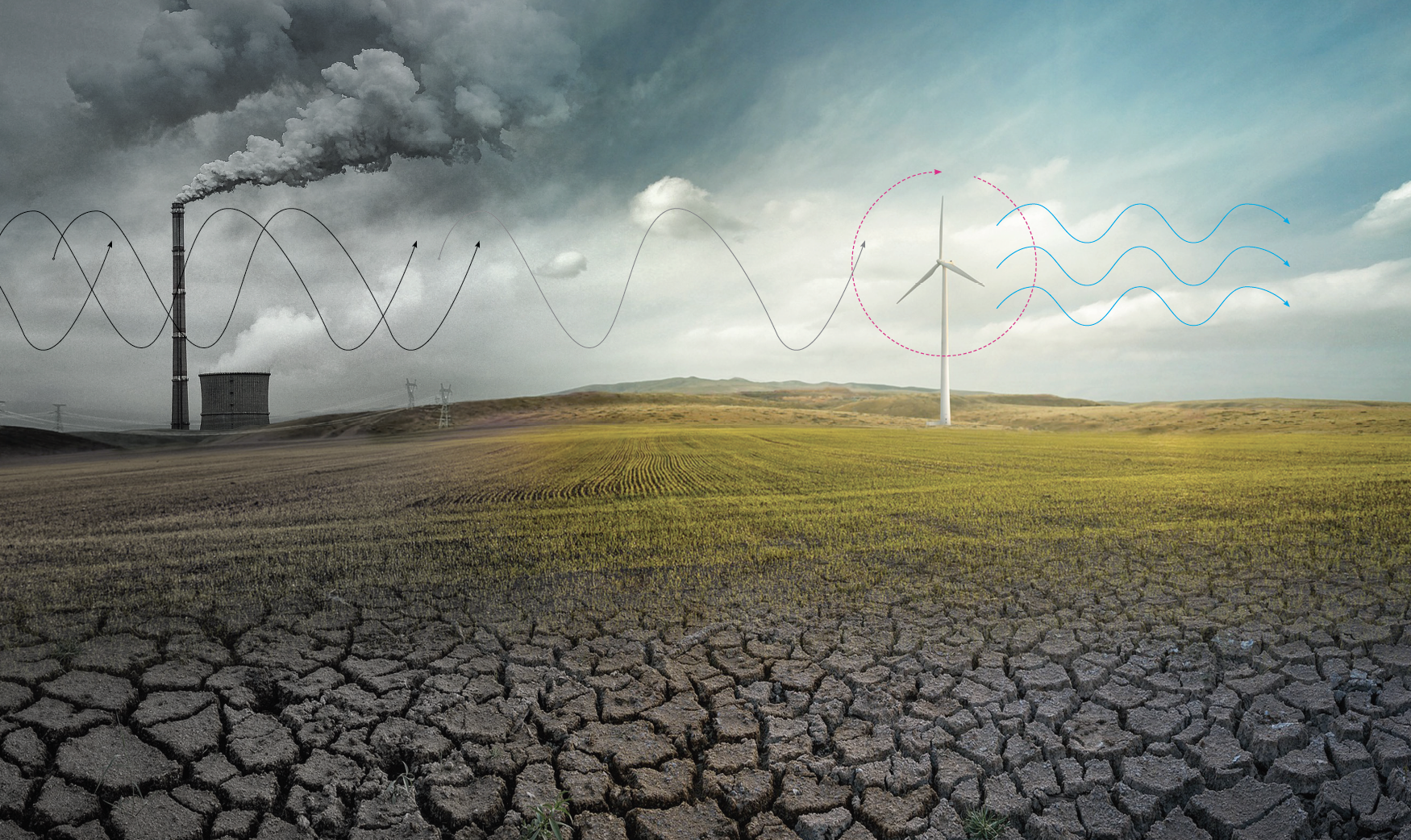
Making sense of climate change and our responsibility to the planet in the age of humans.
The signs are everywhere. Rising sea levels. An intense Atlantic hurricane season. Shrinking ice sheets. Microscopic plastic dust reaching remote areas of the globe. Large swaths of the planet, from Australia to Brazil to the West Coast of the United States, scorched by unprecedented fires. A rise in the number of zoonotic diseases, the kinds caused by pathogens spilling from animals to people, as human activity continues to encroach on natural habitats worldwide.
 Welcome to the Anthropocene era, or the age of humans, an entirely new geological epoch that scientists are proposing to describe the period in Earth鈥檚 history when humanity started having a significant impact on the planet鈥檚 climate and ecosystems. And according to the United Nations Development Programme鈥檚 , we have reached a tipping point. 鈥淲e are the first people to live in an age defined by human choice, in which the dominant risk to our survival is ourselves,鈥� the report states. 鈥淚t is time to make a change. Our future is not a question of choosing between people or trees; it is neither or both.鈥�
The U.N. report provides the latest call for global action on climate change. Scientists have been raising the alarm for years about the effects humans have on the environment and the future of our planet, but there is reason for hope. The recently installed Biden administration has promised to make the environment and climate change key priorities during the next four years. Then there is the gathering of world leaders later this year to discuss their countries鈥� progress since the signing of the 2015 Paris Agreement, which called for 鈥渁mbitious efforts to combat climate change and adapt to its effects.鈥�
But beyond policy changes, the U.N. report challenges us all to take individual and collective actions to remedy both social and planetary imbalances. 鈥淕overnments and policymakers are the central actors, but people鈥檚 own will to shape their life can come together in organized ways through social movements,鈥� the report states. 鈥淐limate change confronts us with a fundamental truth: that our individual stories are braided with the stories of every living thing on the planet and of countless lives yet to be born. Decisions taken in the next decades will shape the story of life on Earth for generations to come.鈥�
What those decisions might be will undoubtedly vary. From recycling and carpooling to voting for candidates who champion climate change legislation and advocating for change in your local community, the first step is awareness. 鈥淟iteracy is important. We have to talk about it,鈥� says ecologist Amanda Chunco, an associate professor of environmental studies and Japheth E. Rawls Professor at 黑料不打烊 whose research focuses on how climate change impacts wildlife. 鈥淭his is how I address climate change in my science classes. I tell my students, 鈥楾hese are the facts, and this is how the facts were established, this is how we know this.鈥� Only then, can we talk about personal responsibility and focus on solutions and finding different ways we can make change.鈥�
The science behind the issue
Establishing a common ground about what causes climate change is a good place to start. Climate, Chunco says, has been changing since before humans entered the picture. She points to three main natural contributing factors: the position of Earth in space, the energy of the sun and the composition of the atmosphere. For more than 100 years, scientists have studied these factors and developed methods to predict future climate changes. They look at tree rings, measure carbon dioxide trapped in bubbles within thick layers of ice in the Arctic and record sunspot emissions to identify patterns that explain the periodic warming and cooling of the planet.
While the position of the planet and the energy of the sun show regular, predictable cycles over millennia, the forces that affect the composition of Earth鈥檚 atmosphere are more complicated, Chunco says, and have changed drastically over the past 200 years thanks in large part to greenhouse gas emissions generated by human activity. Naturally occurring sources of some greenhouse gases, like carbon dioxide emissions from forest fires, do exist. However, human sources of many greenhouse gases have dramatically increased the amount of these gases in the atmosphere in the past two centuries. Even worse, she adds, non-naturally occurring greenhouse gases like chlorofluorocarbons, which are used in refrigerants, are not only strong but also harmful to the ozone layer, which protects us from the sun鈥檚 harmful ultraviolet radiation. These chemicals, some of which can be traced back to the first Industrial Revolution in the 1800s, 鈥渁re 1,300 times more potent as a greenhouse gas than carbon dioxide,鈥� Chunco says. They stay in the atmosphere for longer periods and absorb heat more intensely, which, combined with the dramatic increase of other human-generated greenhouse gases, accelerates the warming of our planet.
鈥淭his is how I address climate change in my science classes. I tell my students, 鈥楾hese are the facts, and this is how the facts were established, this is how we know this.鈥� Only then, can we talk about personal responsibility and focus on solutions and finding different ways we can make change.鈥� 鈥擡cologist Amanda Chunco
Add to that deforestation and misinformation, and you have a serious human-made problem. For Chunco, the biggest threat to fighting climate change is the latter. While it鈥檚 easy to find information that downplays the role of humans in climate change, she says, it is harder to break through the noise with real scientific data. She points to the misinformation campaigns by oil giants like Exxon. According to a 2015 report in Scientific American magazine, the company has known about the effects of fossil fuels on global warming since 1977 鈥� more than a decade before it became a public issue. Rather than investing in alternative energy solutions, the report states, the company chose to publicly call the scientific findings 鈥渃ontroversial鈥� and become 鈥渁 leader in campaigns of confusion,鈥� successfully lobbying to prevent the U.S., China and India from signing the 1998 Kyoto Protocol, an international treaty on climate that aimed to control greenhouse gas.
The decades-long misinformation efforts by oil companies and other interest groups have created a mistrust of scientific data, Chunco says, something that often gets reflected along political extremes, with liberals often championing the findings of climate scientists and conservatives on the other end of the spectrum. 鈥淗ow do you critically evaluate information and not just accept what you want to believe?鈥� she asks.
It鈥檚 a tall order, though not impossible.
Making it a relatable issue

In general, Chunco says, many people don鈥檛 understand the science behind climate change or don鈥檛 want to accept it partly because it is a scary topic, and the consequences are unpleasant to think about. 鈥淧eople are just turned off by big problems and are not willing to address them,鈥� she says. 鈥淚f you don鈥檛 experience it personally, you don鈥檛 understand it as well.鈥� She recalls a recent encounter with a middle-age, upper-middle-class neighbor, who didn鈥檛 see the need to care about climate change since she鈥檚 never come face to face with it in her lifetime. 鈥淚t might not be a problem for you personally, but if you care about farmers, about people in developing countries and food crises around the world, you need to pay attention,鈥� she says.
Breaking down data in a more visual way is key in helping people understand the severity of the issue, says Nathan Pool 鈥�17. A computer scientist with a penchant for conservation and preservation of natural resources, Pool has seen firsthand how machine learning and artificial intelligence technologies have the potential to revolutionize how people interact with climate change data to develop sound solutions. As part of his postgraduate studies, he was part of a research team at N.C. State University that monitored water usage in farms by using live spatial temporal data analytics of satellite images. 鈥淲e had the amount of water farmers were using during that period, and we were able to see whether they were over- or under-using it,鈥� he says. After analyzing the data, they were able to figure out the optimal water utilization and water stress detection so farmers could make the necessary changes. 鈥淒ata can be used for good,鈥� he says.

Take for instance the 鈥渃arbon skyscraper,鈥� a chart created by researchers at the nonpartisan Climate Central organization in January using AI to better depict the speed of change in carbon emissions linked to human activity since the Industrial Revolution. The traditional graph uses a sawtooth pattern to indicate the levels of carbon dioxide over the past million years using direct measurements scientists collected, on average, once per 400 years or so. To fill the gaps in between observations, the traditional graph uses a line to connect the dots. The updated chart used AI to create a continuous curve, allowing us to zoom in and look at readings for every 1,000 years going back from the present. The result, wrote Benjamin Strauss, the organization鈥檚 CEO and chief scientist, shows 鈥渏ust how dramatic the human influence has been 鈥� and how grave our situation may be.鈥�

For Pool, this is one of many examples of how data can be useful in making a topic like climate change easier to understand. 鈥淎 picture is really worth a thousand words,鈥� he says. 鈥淎 lot of the world鈥檚 problems seem like a daunting thing but seeing the way that simple math and coding can apply to that is powerful.鈥�
For Greta Matos 鈥�06, it took a trip to Asia as part of her first job out of college to fully grasp the complexity of the issue. Growing up on a 65-acre organic farm in rural Pennsylvania, the corporate communications and political science double major always felt connected to the planet. She lived off the land, so sustainable practices were second nature to her. Then, while working with factories in China as a manufacturing manager for a U.S.-based product development company, she was exposed to how 鈥渂usiness as usual鈥� was done, how typical supply chain negotiations were solely made based on cost, quality and timeline without taking into account the impact those processes had on the human capital and the environment. 鈥淪eeing the state of the rivers around the factories, the massive scale of impact on the environment as well as the social aspect that were invisible to the consumer in the U.S.,鈥� she says, 鈥渇or me, that was definitely a pivotal point in my career.鈥�

As a corporate communicator, she was prepared to create a narrative that fit the company鈥檚 brand. But she couldn鈥檛 shake the feeling that she shared responsibility for contributing to the degradation of the environment. She tried changing mindsets inside the company to explore more sustainable processes, to no avail. On a personal level, the pollution in the factory cities was so severe, she developed a lung condition. 鈥淚 found myself overwhelmed and frustrated with my own inability to influence change,鈥� she says. That鈥檚 when she decided to focus on corporate transparency and accountability. She returned to the U.S. and transitioned into the social and environmental compliance industry, helping Fortune 100 companies across the spectrum develop strategies based on sustainable and ethical supply chain practices 鈥� from changing the ways they sourced raw materials to paying attention to human rights and environmental issues.
After five years of consulting and telling companies how to do business better, the weight of the work became too much for Matos. She needed a break. Yearning to return to life outdoors, she and her husband moved to Southern Chile in 2014, with the goal of reimagining her role in the industry while embracing opportunities to build a better, more regenerative economy. The merging of her passions resulted in two new ventures: Quila Quina, a global consulting business centered on building transparency and systems of shared value within organizations and throughout global supply webs, and CuraKuda, a company that provides outdoor experiences that build connection between people, horses and nature. 鈥淚 wanted to create my own company and create that model for myself to make courageous decisions and confront the real challenges that come up when you commit, when you are aware of your own negative impacts and make a commitment to change,鈥� she says. 鈥淚t鈥檚 been a full experiment and journey. It came together in this nonlinear fashion of being an opportunity to build the foundation of a business that helps the planet and its economic resources.鈥�
Being part of the solution
While moving across the globe is not the answer for everyone, Chunco says it is important for people to find ways to see the relevance of climate change in their daily lives. And though there is still a political divide on the issue, she is optimistic about a green wing of the Republican Party that is advocating for policy changes. According to a June 2020 Pew Research Center report, younger Republicans, those ages 18 to 39, are more likely than older Republicans to think humans have a large role in climate change, that the federal government isn鈥檛 doing enough to combat it and that the U.S. should focus on developing alternative energy sources.

Jake Tyner 鈥�12, a conservative policy adviser working in the U.S. Congress on energy issues, says there is plenty of evidence that suggests climate change has evolved into a bipartisan issue, particularly when it comes to supporting policy options to reduce its effects. He points to the passage in December of the year-end spending bill that included funding for coronavirus relief but also a variety of energy- and climate-related provisions, which he described as the 鈥渢he most comprehensive energy bill鈥� Congress has passed in more than a decade. 鈥淧eople across the political spectrum have different opinions,鈥� he says, 鈥渇rom regulating through the executive branch to a free market approach.鈥�
Tyner personally agrees mostly with the latter position 鈥� to let the private sector and the government partner to come up with innovative clean energy solutions and technologies 鈥� but says the solutions Congress will come up with will likely fall somewhere in between. 鈥淚t comes down to open dialogue between individuals on the issue; all considerations must be factored into the discussion,鈥� he says. 鈥淥n the one hand, temperatures are rising. On the other, consider the energy industry and how much it contributes to the U.S. and global economy. The fossil fuels sector provides a lot of jobs in the U.S. and plays a pivotal role in our economy.鈥�
For instance, Tyner adds, a lot of the products we鈥檝e used during the pandemic, like masks and other personal protection equipment, are made using fossil fuels. He supports the development of renewable energy technologies but knows we are nowhere near reaching 100 percent, which means our reliance on fossil fuels for power generating will likely continue for decades to come. 鈥淲e need to come together to do the research and come up with solutions,鈥� he says. 鈥淲e need to look across the board. We need a holistic approach.鈥�
There is also the need for other countries to be invested in finding solutions, Tyner says. 鈥淭he U.S. can be carbon neutral but if we don鈥檛 have a global solution, it won鈥檛 really make a difference,鈥� he says. 鈥淚t鈥檚 not an issue that considers borders. It is a global issue.鈥� He points to efforts like the Paris Agreement and the need to get countries like China and India to take more concrete steps toward reducing their greenhouse gas emissions. While it鈥檚 not a perfect agreement, he is encouraged by the dialogue that individual leaders are having as they move forward.
鈥淲e need to come together to do the research and come up with solutions,鈥� he says. 鈥淲e need to look across the board. We need a holistic approach.鈥� 鈥擩ack Tyner ’12
Chunco agrees a global approach is needed but doesn鈥檛 discount the power of personal accountability. She sees a lot of optimism among young people, something that gives her hope for the future. 鈥淲hen you talk to college-age students, it is really promising how many want to make a change,鈥� she says, 鈥渆ven though we know it鈥檚 difficult to change a system that has become embedded for a long time.鈥� There are lessons from the fight against racial inequality that can be applied here, she adds. While there is much work ahead on that front, 鈥減eople are learning new ways they can do better. We need to have those same revolutionary discussions on this topic.鈥�
We can start by feeling uncomfortable, says Matos, and understanding the role we play in perpetuating our current system. 鈥淚t鈥檚 about being aware that when I buy plastic Ziploc bags, because oil is used in their production, I am contributing to the problem,鈥� she says. 鈥淭he majority of the products I buy have been touched by someone who has been forced into that labor in one way or another. I鈥檓 accountable for that. I鈥檓 contributing to that economy. We are all a part of it, and we are all connected to it.鈥�
The point, she says, is not to make everyone feel depressed or guilty, but rather to force us to move beyond it in order to be inspired to create a new system. If you work for a company that manufactures a product, ask how that product is made. If you are a materials scientist, endeavor to develop more sustainable materials. If you鈥檙e a stay-at-home parent, plant a garden to attract butterflies. 鈥淲e need it all,鈥� Matos says. 鈥淎nd if you are in a position to do something big and inspiring, do it. Now is the time to do it. We need abundance thinking and an abundance mindset in order to think beyond our existing system. We need creativity right now.鈥�