


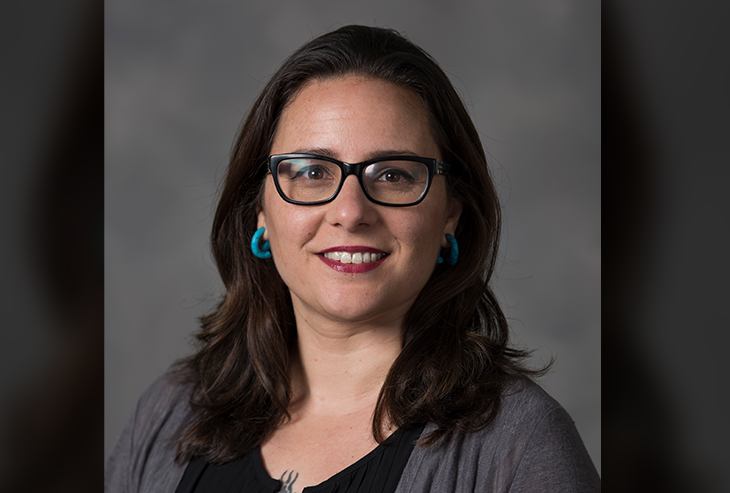
Assistant Professor of Anthropology Jennifer Carroll led the study examining officers鈥� knowledge, preparedness and compassion fatigue when responding to an opioid overdose.
A new study in the journal Drug and Alcohol Dependence titled聽鈥溾�澛爌rovides a first look at how officers think and feel about responding to overdose calls.

As opioid overdose rates continue to rise, the role of first responders 鈥� including police officers 鈥� grows more critical in the fight to save lives. This study found that among officers who responded to overdose calls in the last six months, just 37 percent administered naloxone on the scene and a staggering 36 percent made an arrest. Although the large majority (91 percent) correctly reported whether their state had a Good Samaritan Law in effect, only 26 percent had an accurate understanding of whether that law protects people on the scene from arrest.
The study was led by Assistant Professor of Anthropology Jennifer Carroll in her capacity as a scientific advisor to the U.S. Centers for Disease Control and Prevention鈥檚 Overdose Response Strategy and in cooperation with High Intensity Drug Trafficking Areas throughout the eastern United States. Carroll notes that there is little if any research of this kind on law enforcement officers鈥� involvement in emergency response to overdose. This study surveyed 2,829 officers in 20 states in the fall of 2017; the authors believe this to be the largest such survey of law enforcement officers in the country.
Good Samaritan Laws, which protect overdose victims and callers from arrest for drug possession, and train non-medical personnel (including law enforcement officers) to administer naloxone are two scientifically-proven ways to reduce drug overdose deaths. Despite their renowned success in saving lives, the study authors found that the more frequently officers respond to overdose calls, the more negative their attitudes become about these overdose prevention strategies.
鈥淭he officers appear to believe these [Good Samaritan] laws are ineffective,鈥� says Carroll. 鈥淭his is really important public health work, and the science is incontrovertible. Maybe officers aren鈥檛 there to see the positive outcomes from these laws 鈥� they see them at the overdose scene, but not at that person鈥檚 graduation or their kid鈥檚 birthday party a few months later. It鈥檚 also very likely 鈥攅specially in regions where officer understanding of their own state laws is low and arrest rates at overdose scenes is high 鈥� that these proven strategies aren鈥檛 effective because law enforcement is impeding the law鈥檚 effect by their actions in the field.鈥�
The data raise questions about whether law enforcement officers are best suited to respond to overdose calls, which are medical emergencies, when no other crimes have been reported. Regardless, the authors note that officers who are expected to respond to opioid overdoses should receive additional training on naloxone use and on the specifics of their Good Samaritan Laws, which can vary from state to state.